Installing a window air conditioner yourself can be a straightforward and cost-effective solution to cool your home, transforming your living space into a comfortable oasis. This guide provides a step-by-step process for safe, do-it-yourself window AC installation, ensuring your unit is properly secured and operates efficiently. It covers everything from choosing the right unit based on BTU capacity to essential safety checks, empowering you to achieve a perfectly chilled environment with confidence.
Understanding Window Air Conditioners
A window air conditioner is a self-contained unit designed to cool a single room by drawing in warm air, removing its heat and humidity, and then returning cooled air. These units are typically installed in a window opening, venting hot air to the outside. The basic principle involves a refrigerant cycling through a compressor, condenser, expansion valve, and evaporator coil. This cycle allows the unit to absorb heat from the indoor air and release it outdoors, effectively lowering the room’s temperature.
Modern electrical air conditioning was invented by Willis Carrier in 1902. Early air conditioners were large, expensive, and primarily used in industrial settings. Over time, advancements in technology led to smaller, more efficient, and affordable units, making residential air conditioning a common convenience. Window units, in particular, became popular for their ease of installation and ability to cool specific areas without the need for extensive ductwork. For see our home air recommendations on this site.
Today, there are several types of window air conditioners, often categorized by their cooling capacity, measured in British Thermal Units (BTUs), and the features they offer. Small units (5,000-8,000 BTUs) are ideal for bedrooms or small offices, while medium units (10,000-12,000 BTUs) suit living rooms or larger bedrooms. Large units (14,000 BTUs and above) can cool open-plan spaces. Modern window air conditioners frequently include energy-saving inverter technology, which adjusts compressor speed to maintain temperature more efficiently, alongside features like air purification filters, dehumidification modes, rapid cooling, sleep modes, and smart controls for remote operation. Selecting the right type depends heavily on the room size and specific cooling requirements.
Choosing the Right Window Air Conditioner for Your Home
Selecting an appropriate window air conditioner involves careful consideration of your specific needs and the room’s characteristics to ensure optimal performance and energy efficiency. Matching the unit’s capacity to your space is paramount for effective cooling.
Determining Your Cooling Needs
Before purchasing, accurately assess your room’s dimensions and how frequently you plan to use the air conditioner.
- Room Size and Required AC Capacity: The most crucial factor is matching the air conditioner’s BTU rating to your room’s square footage. An undersized unit will struggle to cool the room adequately, running constantly and wasting energy, while an oversized unit will cool too quickly, leading to frequent on-off cycling, poor dehumidification, and increased energy consumption.
- For example, a room of 150-250 sq ft typically needs 6,000 BTUs.
- 250-350 sq ft requires around 8,000 BTUs.
- 350-450 sq ft needs 10,000 BTUs.
- 450-550 sq ft benefits from 12,000 BTUs. These are general guidelines; factors like ceiling height, direct sunlight exposure, and insulation quality can influence the ideal BTU requirement.
- Occupancy and Usage Frequency: Consider how many people regularly occupy the room. Each person adds approximately 600 BTUs to the cooling load. If the room is frequently used, or if it’s a busy area like a living room, you might need a slightly higher BTU unit. For bedrooms, where consistent comfort for extended periods is key, a unit with a good sleep mode might be more valuable than raw power.
- Window Type and Size: Crucially, measure your window opening. Window AC units come in various widths and heights. Ensure the unit you choose will fit snugly and securely in your window. Most units include accordion side panels to seal gaps, but these have limitations. Some windows, like casement or slider windows, may require specific vertical or “casement” window AC units, as standard horizontal models won’t fit.
Key Features to Consider
|
Our Picks for the Best Air Conditioner in 2026
As an Amazon Associate I earn from qualifying purchases.
|
||
| Num | Product | Action |
|---|---|---|
| 1 | Evaporative Air Cooler with Remote & Timer, 2200+ CFM Portable Fan That Blows Cold Air for Large Room, Home Office, Bedroom - 2.1Gal High-Capacity Tank, 3 Modes, Whisper Quiet 30dB & Sleep Mode |

|
| 2 | Windowless Portable Air Conditioners with Remote, Ventless Ac Unit Ductless Air Cooler,Hoseless Quiet Evaporative Oscillating Swamp Cooler,12H Timer & 4 Ice Box for Room Indoor Outdoor Office Bedroom |
|
| 3 | Midea 5,000 BTU EasyCool Small Window Air Conditioner - Cool up to 150 Sq. Ft. with Easy-to-Use Mechanical Controls and Reusable Filter, Perfect for Small Bedroom, Living Room, Home Office |
|
| 4 | Dreo Tower Fan for Bedroom, 2026 Upgraded DC Motor, 28ft/s High Velocity, 20dB Ultra Quiet Standing Fan, 8 Speeds 4 Modes, 90° Oscillating Bladeless Fan for Indoors, Floor Fans with Remote, Black |
|
| 5 | Portable Air Conditioners, 3-IN-1 Swamp Cooler, Evaporative Air Cooler,Remote & Touch Control, 90°+90° Oscillation,LED Screen, Air Coolong Fan for Outdoor Indoor |
|
| 6 | BLACK+DECKER Window Air Conditioner 10000 BTU, AC Window Unit Cools Up to 450 Square Feet, Window AC Unit with Remote Control, 3 Cooling Speeds and Fan Only Function, BD10WT6, White |
|
| 7 | 24" Windowless Portable Air Conditioner, 15H Timer & 120°Oscillation, 3-IN-1 Portable AC Unit with Remote, 2-Gal Tank, 3 Modes & 3 Speeds, Ultra-Quiet Ventless Swamp Cooler for Home Office, Off |
|
| 8 | Dreo Tower Fan for Bedroom, 42 Inch 120° Oscillating Fan, 25dB Quiet DC Motor, 28ft/s Velocity Bladeless Standing Fan with 12 Speeds, 4 Modes, 12H Timer Cooling Fans for Home, Living Room |
|
| 9 | Windowless Portable Air Conditioner, 24.4" Small Evaporative Air Cooler for Room No Window, 3-Speed Settings, 4 Modes, 7H Timer, Remote Control, 4 Ice Packs, Quiet AC Unit for Bedroom, White |
|
| 10 | SereneLife Portable Swamp Cooler Air Conditioner - 2500 CFM Airflow, 8 Gallon Water Tank Portable Evaporative Air Cooler for Room & Outdoors, WiFi, Humidifier & Fan Modes, Ice Packs & Remote Included |
|
Modern window air conditioners offer a range of features that can enhance comfort, efficiency, and convenience.
- Inverter Technology for Energy Efficiency: Inverter units adjust the compressor speed to maintain a consistent temperature, rather than constantly cycling on and off at full power. This results in significant energy savings (up to 30-50% compared to non-inverter models), quieter operation, and more stable cooling. While often more expensive upfront, the long-term energy savings can justify the investment.
- Air Filtration and Dehumidification: Look for units with washable air filters, which are essential for maintaining air quality and unit efficiency. Some models offer advanced multi-stage filtration systems (e.g., HEPA, activated carbon) to remove allergens, dust, and odors. A dedicated dehumidification mode is also beneficial, especially in humid climates, as it helps remove moisture from the air, making the room feel cooler even at a higher temperature setting.
- Cooling Modes and Smart Controls: Beyond basic cooling, units often feature multiple fan speeds, energy-saver modes, and sleep modes that adjust temperature and fan speed overnight for quieter operation. Smart ACs with Wi-Fi connectivity allow you to control the unit remotely via a smartphone app, integrate with smart home systems, or use voice commands, offering unparalleled convenience. Programmable timers are also a standard feature that helps in managing energy consumption.
- Remote Control and User Interface: A user-friendly remote control and an intuitive display on the unit are important for ease of operation. Look for clear buttons and an easy-to-read screen.
Comparing Reputable Air Conditioner Brands
The market offers a wide array of brands, each with its strengths and weaknesses. Researching reputable manufacturers can guide your decision.
- Daikin: Known for high-quality, reliable, and energy-efficient units, especially inverter technology. Often at a higher price point but praised for durability and quiet operation.
- Panasonic: Offers a good balance of performance, features, and energy efficiency. Their units often include advanced air purification technologies.
- LG: Popular for innovative designs, smart features (like Wi-Fi connectivity), and often a stylish aesthetic. They provide a range of capacities suitable for various needs.
- Samsung: Known for integrating smart home capabilities and unique designs. Their units are typically feature-rich, providing good value.
- Frigidaire/GE/Whirlpool: These brands are often found in the mid-range price segment, offering reliable basic functionality and good cooling performance without too many frills. They are generally considered good value for money.
When comparing brands, consider not just the upfront cost but also the long-term operating costs (energy efficiency ratings), warranty coverage, and the availability and reputation of local service and support. Reading user reviews and expert assessments can provide valuable insights into real-world performance and customer satisfaction.
> “Choosing the right BTU for your space is the single most critical decision. Too large, and you’ll have a clammy room; too small, and you’ll never feel truly cool. Always measure your room and factor in heat sources before you buy.” – Sarah Jenkins, HVAC Design Engineer
Step-by-Step DIY Installation Guide
Installing a window air conditioner safely and correctly is crucial for its performance and your peace of mind. Follow these steps meticulously to ensure a secure and efficient setup.
Essential Tools and Materials
Before you begin, gather all necessary tools and materials:
- Tools:
- Phillips head screwdriver
- Flathead screwdriver
- Drill (with appropriate bits for pilot holes)
- Measuring tape
- Pencil
- Level
- Utility knife or scissors
- Pliers (optional)
- Materials:
- Window air conditioner unit
- Side panels/insulation included with the unit
- Top mounting rail (if not pre-attached)
- Screws (provided with unit)
- Weatherstripping or foam insulation (optional, for extra sealing)
- Support bracket (recommended for heavier units or added security)
- Gloves (for handling sharp edges)
- Safety glasses (to protect eyes from debris)
Preparing Your Window and Unit
Proper preparation sets the stage for a smooth installation.
- Clean the Window Area: Thoroughly clean the window sill, frame, and surrounding area where the AC will be installed. Remove any dirt, debris, or old paint flakes that could hinder a tight seal.
- Inspect the Window Frame: Check the window frame for any rot, damage, or loose components. The frame must be sturdy enough to support the weight of the air conditioner. If there’s damage, repair it before proceeding.
- Attach Top Mounting Rail: Many window AC units come with a top mounting rail that needs to be attached to the top of the unit. This rail often has a lip that helps secure the unit in the window frame. Follow the manufacturer’s instructions carefully to attach it with the provided screws.
- Install Side Panels: Extend the accordion side panels, if they are not already attached, and slide them into the channels on the sides of the air conditioner. These panels will later extend to fill the gap between the unit and the window frame.
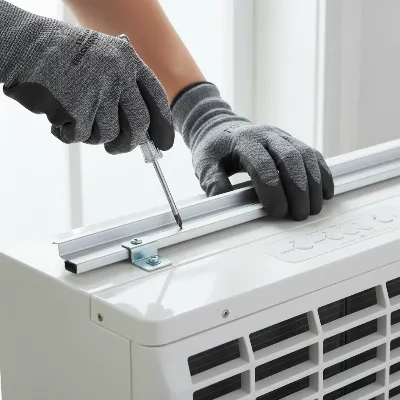 A close-up of a person attaching the top mounting rail to a window air conditioner unit before installation.
Installing the Air Conditioner
This is the core installation process. Always work with a helper for heavier units.
- Position the Unit: Carefully lift the air conditioner and place it onto the window sill. Center the unit within the window opening. Ensure the bottom lip of the unit’s frame rests against the window sill, and the top mounting rail hooks over the lower sash of the window. For optimal drainage, ensure the unit is tilted slightly outward (about 1/4 inch per foot of width). Many units have a built-in slight tilt, but verify with a level. This prevents condensate from accumulating inside the room.
- Lower the Window Sash: Slowly lower the upper window sash until it rests firmly against the top mounting rail of the air conditioner. This step is critical for securing the top of the unit in place.
- Extend and Secure Side Panels: Extend the accordion side panels outward until they meet the side frames of the window. Use the provided screws to secure these panels to the window frame. Some units have holes in the side panels or frame for this purpose. Drill pilot holes if necessary to prevent wood splitting.
- Install Support Brackets (If Applicable): For heavier units, or for added stability, install a support bracket underneath the air conditioner outside the window. These brackets usually screw into the window sill or the exterior wall. Follow the bracket manufacturer’s instructions for secure installation. This external support significantly reduces the stress on the window frame and prevents accidental falls.
- Seal Gaps with Weatherstripping: Once the unit and side panels are secured, use the included foam insulation or weatherstripping to seal any remaining gaps around the side panels, the bottom of the unit, and where the lower sash meets the top mounting rail. A good seal is vital for energy efficiency and preventing air leaks.
- Install Sash Lock Bracket: Secure the window sash in place with the provided sash lock bracket. This small metal bracket usually screws into the upper sash and the window frame, preventing the window from being opened from the outside and adding an extra layer of security.
Testing and Final Checks
After installation, perform these checks to ensure everything is operating correctly and safely.
- Plug In and Power On: Plug the air conditioner into a dedicated electrical outlet. Avoid using extension cords, as they can overheat and pose a fire hazard. Turn on the unit and select a cooling mode.
- Check for Proper Operation: Listen for normal fan and compressor sounds. Feel for cool air coming from the front vent. Allow the unit to run for 10-15 minutes to confirm it’s cooling effectively.
- Inspect for Air Leaks: Stand outside and feel around the unit for hot air leaking from the side panels or seals. Inside, check for drafts. Any leaks indicate poor sealing and will reduce efficiency. Apply additional weatherstripping or tape if needed.
- Verify Drainage: After some operation, check outside the unit for dripping condensate. This indicates proper drainage. If water is pooling inside or around the unit, the tilt may be insufficient, or the drainage holes could be blocked.
- Test Security: Gently push and pull on the unit from the inside to ensure it is firmly secured in the window and does not wobble. Confirm that all screws are tightened.
Buying Guide: Expert Tips for Window AC Installation
While DIY installation is achievable, being aware of common pitfalls and best practices can significantly enhance safety and efficiency.
Common Installation Mistakes to Avoid
Preventing these mistakes will save you headaches and ensure your unit performs optimally.
- Incorrect BTU Sizing: As discussed, choosing an air conditioner with an incorrect BTU rating for your room size is a leading cause of inefficiency and dissatisfaction. Always measure and consult a sizing chart. An oversized unit will short-cycle, leading to poor dehumidification, making the room feel clammy despite being cold. An undersized unit will run continuously, struggling to reach the set temperature and consuming excessive energy.
- Neglecting Window Integrity: Installing a heavy air conditioner in a weak, rotted, or damaged window frame is a significant safety hazard. The unit could fall out, causing injury or property damage. Always inspect and repair your window frame before installation.
- Improper Sealing: Gaps around the air conditioner and side panels allow warm outdoor air to seep in, forcing the unit to work harder and increasing energy bills. Use all provided weatherstripping and foam, and consider additional insulation if needed for a truly airtight seal.
- Skipping External Support: For larger or heavier units, failing to install an external support bracket can put undue stress on your window frame and increase the risk of the unit falling. Always err on the side of caution and use a bracket when recommended by the manufacturer or if the unit exceeds a certain weight.
- Using Extension Cords: Window air conditioners draw a significant amount of power. Plugging them into an extension cord can overload the cord, leading to overheating, fire, or damage to the unit. Always plug the unit directly into a dedicated wall outlet. If an outlet is too far, consult an electrician to install a new one.
Tips for Efficient and Energy-Saving AC Use
Maximize your comfort and minimize your electricity bill with these expert tips.
- Set the Optimal Temperature: Most experts recommend setting your thermostat to around 78°F (25-26°C) during the day. This temperature is cool enough for comfort but not so low that it overworks the unit. For every degree you lower the thermostat below this point, your energy consumption can increase by 3-5%.
- Regular Cleaning and Maintenance:
- Clean or Replace Air Filters: The air filter should be cleaned monthly (or more frequently if you have pets or allergies). A dirty filter restricts airflow, reduces cooling efficiency, and forces the unit to work harder, increasing energy consumption and potentially leading to breakdowns.
- Clean Coils and Vents: Periodically clean the condenser (outdoor) and evaporator (indoor) coils. Dust and debris on these coils can significantly impair heat transfer. Gently brush away debris from the outdoor coils and wipe down indoor vents.
- Utilize Programmable Timers and Smart Features: If your unit has a programmable timer, use it to automatically turn off the AC when you’re away and turn it back on shortly before you return. Smart ACs offer even greater control, allowing you to manage schedules and temperatures remotely, optimizing usage to your exact needs.
- Combine with Fans: A ceiling fan or oscillating floor fan can make a room feel several degrees cooler without significantly lowering the AC temperature. The air circulation helps distribute the cool air more effectively, allowing you to set the AC higher and still feel comfortable.
- Seal Leaks and Insulate: Beyond sealing the AC unit itself, ensure your windows and doors are properly sealed with weatherstripping and caulk. Good insulation in walls and attics prevents heat from entering your home, reducing the burden on your air conditioner. Close blinds or curtains during the hottest parts of the day to block direct sunlight and reduce heat gain.
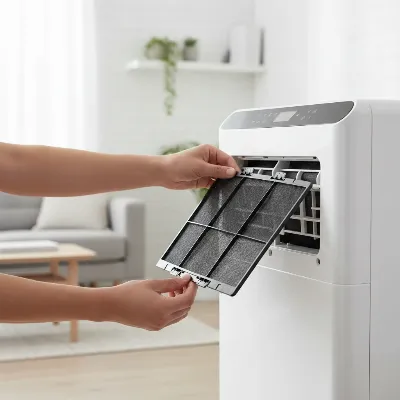 A person cleaning the air filter of a window air conditioner for efficient use and energy saving.
Conclusion
Successfully installing a window air conditioner yourself is a rewarding DIY project that significantly improves your home comfort during warm months. By carefully selecting the right unit for your space, meticulously preparing your window, and following each installation step, you can ensure a secure, efficient, and long-lasting cooling solution. Applying key tips like proper BTU sizing, ensuring window integrity, and regular maintenance will not only enhance performance but also contribute to significant energy savings. Embrace the cool comfort of your newly installed window AC, knowing you’ve mastered the process safely and effectively.
Frequently Asked Questions
What are the dangers of an improperly installed window air conditioner?
An improperly installed window air conditioner poses several risks, including the unit falling out of the window, which can cause severe injury or property damage. It can also lead to air and water leaks, reducing efficiency, increasing energy bills, and potentially causing water damage or mold growth around the window frame due to improper drainage.
Can I install a window air conditioner by myself?
Yes, many window air conditioners are designed for DIY installation, especially smaller and lighter models. However, for heavier units (typically over 80-100 lbs), it's highly recommended to have a second person help lift and secure the unit to prevent injury and ensure proper placement. Always read the manufacturer's instructions carefully.
Do I need a support bracket for my window air conditioner?
While not all window air conditioners require a support bracket, it is strongly recommended for heavier units (typically over 80-100 lbs) or if your window frame is older or less robust. A support bracket adds an essential layer of safety and stability, distributing the unit's weight and reducing stress on the window.
How do I ensure my window air conditioner drains properly?
Most window air conditioners are designed with a slight factory tilt to ensure condensate drains effectively to the outside. When installing, verify this tilt (typically 1/4 inch per foot of width) using a level. If the unit is not tilted correctly, water may pool inside or drip into your room.
How often should I clean my window AC filter?
It is generally recommended to clean or wash your window air conditioner's filter every two to four weeks, especially during periods of heavy use. In homes with pets, smokers, or high dust levels, more frequent cleaning may be necessary to maintain optimal airflow and efficiency.
How to Install a Window Air Conditioner Safely
This guide provides step-by-step instructions for safely installing a window air conditioner, covering preparation, unit placement, securing, and final checks.
Clean the window area thoroughly and inspect the frame for damage. Attach the top mounting rail to the AC unit and install the accordion side panels, following the manufacturer's instructions. This ensures a clean, sturdy base for installation.
Carefully lift and center the unit on the window sill, ensuring the bottom lip rests against the sill and the top rail hooks over the lower sash. Lower the window sash firmly against the top rail, then extend and secure the side panels to the window frame with screws. For heavier units, install an external support bracket.
Use weatherstripping or foam insulation to seal any remaining gaps around the side panels and where the window sash meets the unit. This prevents air leaks and improves energy efficiency. Finally, install the provided sash lock bracket to secure the window and enhance security.
Plug in the unit and power it on, checking for cool air and normal operation for 10-15 minutes. Inspect for air leaks around the seals and verify proper condensate drainage outside the unit. Gently push and pull the unit to confirm it is firmly secured in the window.
Get our weekly buyer guide
Practical specs, not advice. Unsubscribe anytime.

Fantastic guide! I’ve always paid someone to install my window ACs, but this time I decided to try it myself. The explanation of how these units work, drawing in warm air and returning cooled air, really helped me understand the process better. My office is now an ‘oasis’ just like it said it would be!
This was super helpful for getting my new unit set up. I appreciated the advice on choosing the right BTU capacity; it really made a difference in how well my bedroom cools down. My only minor complaint is that I wish there was a bit more detail on sealing the gaps around the unit, but overall, a great resource.
I was dreading installing my new window AC, but this guide made it so much easier. The step-by-step instructions for securing the unit were incredibly clear. I felt confident throughout the whole process and now my living room is finally cool and comfortable. Definitely recommend following these tips!
The guide was mostly good, especially the safety checks section which I found really important. However, I struggled a bit with understanding the part about the refrigerant cycling through the compressor. It felt a little too technical for a DIY guide. Still, I got my AC in, so it worked out.