Recharging your home air conditioner’s refrigerant is a task best left to EPA-certified HVAC professionals due to significant safety hazards, legal issues, and potential system damage. If your AC is blowing warm air, it likely has a refrigerant leak, as refrigerant is not consumed but rather circulates in a sealed system. Attempting a DIY fix without proper knowledge and tools can lead to costly repairs and environmental harm.
What is Refrigerant and Why “Recharging” is Misleading
Refrigerant, commonly known by the brand name Freon (for R-22), is a vital chemical compound that enables your air conditioner’s cooling process. It continuously cycles through your HVAC system, absorbing heat from inside your home and releasing it outdoors, thereby lowering the indoor temperature. This essential substance transitions between liquid and gas states to facilitate heat transfer.
Historically, R-22 (Freon) was the standard, but it has been largely phased out due to its ozone-depleting properties. Most modern AC units use R-410A, and newer, more environmentally friendly refrigerants with lower Global Warming Potential (GWP) are emerging. For best home air roundups on this site.
It’s crucial to understand that refrigerant is not “consumed” like fuel. Your AC system is a sealed loop; if refrigerant levels are low, it indicates a leak. Simply adding more refrigerant without locating and repairing the leak is, at best, a temporary solution and, at worst, an expensive and damaging one.
Handling refrigerants also presents significant environmental and safety concerns. Many refrigerants are potent greenhouse gases, contributing to climate change if released. Direct contact can cause severe frostbite, and inhalation can lead to toxicity, asphyxiation, and other health risks due to the chemical’s nature.
The Legal Landscape of AC Refrigerant Handling
Regulations governing AC refrigerants are stringent, primarily enforced by the Environmental Protection Agency (EPA) in the United States. These rules protect the environment and ensure safe handling. For most central home AC systems using regulated refrigerants like R-22 and R-410A, purchasing, handling, and recharging require specific EPA Section 608 certification.
The production and import of R-22 were banned as of January 1, 2020, as part of an international effort to phase out ozone-depleting substances. While existing R-22 units can still be serviced with reclaimed refrigerant, its scarcity has significantly increased costs. More recently, new rules under the American Innovation and Manufacturing (AIM) Act began phasing out R-410A for new systems from January 1, 2025, due to its high GWP, promoting refrigerants like R-454B and R-32.
Attempting to handle refrigerants without proper certification is not only dangerous but also illegal and can result in substantial fines. Releasing refrigerants into the atmosphere is strictly prohibited under federal law.
Recognizing the Signs Your AC Might Be Low on Refrigerant
Before taking any action, it’s vital to confirm if low refrigerant is the actual problem. Several common signs indicate your AC system might be running low:
- Warm Air Blowing from Vents: If your AC is running but the air isn’t cold, or feels warmer than usual, it’s a primary indicator that the system lacks sufficient refrigerant to absorb heat effectively.
- Ice or Frost Buildup: Paradoxically, you might see ice forming on the refrigerant lines (the copper lines running to your outdoor unit) or on the indoor evaporator coil. This occurs because low refrigerant pressure causes the coil to get too cold, freezing moisture in the air.
- AC Running Constantly or Short Cycling: An AC unit low on refrigerant will struggle to reach your desired thermostat setting, causing it to run for unusually long cycles or to turn on and off frequently (short cycling) without effectively cooling your home.
- Hissing or Bubbling Noises: These sounds often come from the outdoor unit or near the refrigerant lines and are a strong sign of a refrigerant leak as the gas escapes.
- Higher Energy Bills: When your AC system works harder to compensate for insufficient refrigerant, it consumes more electricity, leading to a noticeable increase in your monthly utility costs.
- Inconsistent Room Temperatures or Increased Humidity: Low refrigerant can result in uneven cooling throughout your home, with some rooms feeling colder than others, and the system may struggle to remove humidity, leaving your indoor environment feeling sticky.
Why DIY Recharge Kits are Risky and Often Ineffective
While the market offers “DIY AC recharge kits,” particularly for automotive AC systems, HVAC professionals widely caution against their use for home air conditioners for several critical reasons:
- Temporary Fix for a Deeper Problem: These kits typically allow you to add refrigerant, but they do not address the root cause of the low refrigerant: a leak. Adding refrigerant without fixing the leak is akin to refilling a leaky bucket; the problem will recur, wasting money and potentially exacerbating the leak over time.
- Risk of Overcharging: Overcharging an AC system with refrigerant can be as damaging as undercharging it. Too much refrigerant creates excessive pressure, forcing the compressor to work harder, which can lead to overheating, reduced airflow, strange noises, inconsistent cooling, and even complete compressor failure. Replacing a compressor is one of the most expensive AC repairs.
- Using the Wrong Refrigerant Type: Home AC units are designed for specific refrigerants. Using an incompatible type, or even a so-called “R-22a” or “22a” substitute (which is highly flammable and not EPA-approved for R-22 systems), can severely damage the system and pose fire hazards.
- System Contamination: Without proper vacuuming, a DIY recharge can introduce air and moisture into the sealed system. This contamination can lead to corrosion, acid formation, and component breakdown, significantly reducing efficiency and lifespan.
> “Adding refrigerant without fixing the leak is a massive waste of money. Refrigerant isn’t cheap, and the underlying leak will just cause the problem to return.” – HVAC Expert, (paraphrased from search results)
The Professional Approach: Diagnosis and Repair
Given the complexities, legalities, and risks, handling home AC refrigerant is a task best left to EPA-certified HVAC technicians. Their process involves thorough diagnosis and repair:
- Accurate Leak Detection: Professionals use specialized tools like electronic leak detectors (sniffers), UV dye kits (which illuminate leaks under black light), and nitrogen pressure tests to pinpoint the exact location of a leak, even small ones.
- Leak Repair: The crucial step is repairing the leak before adding any refrigerant. This may involve brazing (welding) small holes, replacing damaged sections of tubing, or replacing faulty components like evaporator or condenser coils. Simply topping off a leaky system is not a professional solution.
- System Evacuation: After a leak is repaired, the system must be thoroughly evacuated using a vacuum pump. This process removes all air and moisture from the lines, which is vital to prevent contamination and ensure the refrigerant’s efficiency.
- Precise Refrigerant Recharging: Once the system is sealed and evacuated, the technician will weigh in the exact amount and type of refrigerant specified by the manufacturer. This precise measurement ensures optimal system performance and avoids the dangers of over or undercharging. Manifold gauges are used to monitor pressures during this process.
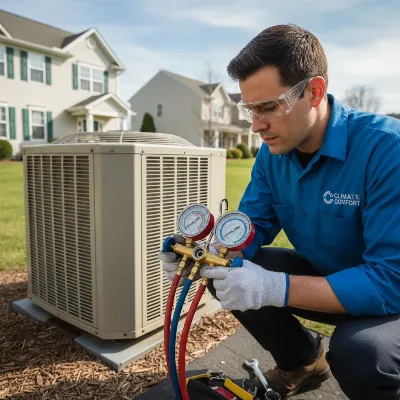 An HVAC technician in safety gear diagnosing an outdoor air conditioning unit with gauges
Conclusion
The allure of a quick DIY fix for a malfunctioning home air conditioner is understandable, especially when it comes to “recharging the Freon.” However, the reality of modern AC systems, coupled with strict environmental regulations and the inherent dangers of handling refrigerants, makes this a task ill-suited for the average homeowner. Low refrigerant is always a symptom of a leak, and attempting to add more without professional diagnosis and repair can lead to severe system damage, safety hazards, and legal penalties. Prioritizing regular maintenance and entrusting any suspected refrigerant issues to an EPA-certified HVAC technician is the safest, most effective, and ultimately most economical approach to keeping your home cool and your AC system running efficiently. Don’t risk costly mistakes; let the experts handle the complex chemistry of your cooling.
Frequently Asked Questions
Is it illegal for a homeowner to add refrigerant to their AC?
|
Our Picks for the Best Air Conditioner in 2026
As an Amazon Associate I earn from qualifying purchases.
|
||
| Num | Product | Action |
|---|---|---|
| 1 | Dreo Tower Fan for Bedroom, 42 Inch 120° Oscillating Fan, 25dB Quiet DC Motor, 28ft/s Velocity Bladeless Standing Fan with 12 Speeds, 4 Modes, 12H Timer Cooling Fans for Home, Living Room |

|
| 2 | Dreo Tower Fan for Bedroom, 2026 Upgraded DC Motor, 28ft/s High Velocity, 20dB Ultra Quiet Standing Fan, 8 Speeds 4 Modes, 90° Oscillating Bladeless Fan for Indoors, Floor Fans with Remote, Black |
|
| 3 | Windowless Portable Air Conditioners with Remote, Ventless Ac Unit Ductless Air Cooler,Hoseless Quiet Evaporative Oscillating Swamp Cooler,12H Timer & 4 Ice Box for Room Indoor Outdoor Office Bedroom |
|
| 4 | Evaporative Air Cooler with Remote & Timer, 2200+ CFM Portable Fan That Blows Cold Air for Large Room, Home Office, Bedroom - 2.1Gal High-Capacity Tank, 3 Modes, Whisper Quiet 30dB & Sleep Mode |
|
| 5 | SereneLife Portable Swamp Cooler Air Conditioner - 2500 CFM Airflow, 8 Gallon Water Tank Portable Evaporative Air Cooler for Room & Outdoors, WiFi, Humidifier & Fan Modes, Ice Packs & Remote Included |
|
| 6 | BLACK+DECKER Window Air Conditioner 10000 BTU, AC Window Unit Cools Up to 450 Square Feet, Window AC Unit with Remote Control, 3 Cooling Speeds and Fan Only Function, BD10WT6, White |
|
| 7 | Portable Air Conditioners, 3-IN-1 Swamp Cooler, Evaporative Air Cooler,Remote & Touch Control, 90°+90° Oscillation,LED Screen, Air Coolong Fan for Outdoor Indoor |
|
| 8 | Midea 5,000 BTU EasyCool Small Window Air Conditioner - Cool up to 150 Sq. Ft. with Easy-to-Use Mechanical Controls and Reusable Filter, Perfect for Small Bedroom, Living Room, Home Office |
|
| 9 | Windowless Portable Air Conditioner, 24.4" Small Evaporative Air Cooler for Room No Window, 3-Speed Settings, 4 Modes, 7H Timer, Remote Control, 4 Ice Packs, Quiet AC Unit for Bedroom, White |
|
| 10 | 24" Windowless Portable Air Conditioner, 15H Timer & 120°Oscillation, 3-IN-1 Portable AC Unit with Remote, 2-Gal Tank, 3 Modes & 3 Speeds, Ultra-Quiet Ventless Swamp Cooler for Home Office, Off |
|
For most central home AC systems using regulated refrigerants like R-22 or R-410A, the purchase and handling of these substances require EPA Section 608 certification. While state and local laws vary, the federal Clean Air Act makes it illegal to knowingly vent refrigerants into the atmosphere.
Can low refrigerant damage my AC compressor?
Yes, running an AC system with low refrigerant forces the compressor, the “heart” of your AC, to work harder than intended. This can lead to overheating, increased wear and tear, and eventually severe damage or complete failure, which is one of the most expensive AC components to replace.
How can I tell what type of refrigerant my AC uses?
You can usually find the refrigerant type by checking the owner’s manual of your AC unit or looking for a label or nameplate on the outdoor condenser unit. This label will typically specify the refrigerant type, such as R-410A for newer systems or R-22 for older ones.
What should I do if I suspect my AC is low on refrigerant?
If you notice signs of low refrigerant, the best course of action is to turn off your AC unit to prevent further damage. Then, immediately contact an EPA-certified HVAC technician. They have the expertise and tools to safely diagnose the issue, locate and repair any leaks, and properly recharge the system.
Are AC “stop leak” products effective or safe?
HVAC professionals generally advise against using “stop leak” products. While they promise a quick fix, they are often ineffective for larger leaks and can cause more harm by clogging sensitive components within your AC system, leading to more extensive and costly repairs down the line.
Get our weekly buyer guide
Practical specs, not advice. Unsubscribe anytime.

This was really helpful in understanding why my AC wasn’t cooling properly. I always thought Freon was just something you topped off like car oil. It makes total sense now that it’s a sealed system and a leak is the real problem. I appreciate the emphasis on EPA-certified professionals; it gives me peace of mind.
My AC unit has been struggling, and I suspected it was a refrigerant issue. This explained perfectly why it’s not a simple ‘recharge’ and the risks involved with trying to do it without the right tools. I’m definitely going to have an HVAC tech come out and properly diagnose the leak instead of risking environmental harm or more costly repairs.
Good info on the dangers of DIY, but I wish there was a bit more detail on what to look for when choosing an HVAC professional. It mentions EPA certification, which is good, but some tips on pricing or what questions to ask would have been useful. Still, it convinced me not to try fixing the warm air issue myself.
I’m so glad I read this before trying to tackle a refrigerant recharge myself. My AC was blowing warm air, and I was about to buy a DIY kit. Learning that refrigerant isn’t ‘used up’ but indicates a leak was a huge eye-opener. Definitely calling a professional now to avoid damaging my system further.