If your air conditioner is running but not cooling, common issues include a dirty air filter, incorrect thermostat settings, a blocked outdoor condenser unit, or a frozen evaporator coil. Many of these problems can be diagnosed and fixed with basic DIY steps, potentially saving you from an expensive service call.
Overview of Air Conditioners
An air conditioner is more than just a box that blows cold air; it’s a sophisticated system designed to transfer heat from inside your home to the outside, creating a comfortable indoor environment. Understanding its basic components and how they interact is crucial for effective troubleshooting.
What is an Air Conditioner?
At its core, an air conditioner is a refrigeration system that removes heat and humidity from indoor air and replaces it with cooler, drier air. This process involves a refrigerant circulating through a closed loop of coils, absorbing heat from your home’s air, and then releasing that heat outside. For see our home air recommendations on this site.
Brief History of Air Conditioner Development
The concept of artificial cooling dates back centuries, but modern air conditioning as we know it began in 1902 with Willis Carrier. His invention, designed to control humidity in a printing plant, laid the foundation for today’s comfort cooling systems. Over the decades, AC technology has evolved significantly, incorporating features like thermostat controls, more efficient refrigerants, and inverter technology to enhance performance and energy savings.
Common Types of Air Conditioners
Air conditioners come in various forms, each suited for different applications:
- Central Air Conditioners: The most common type, using a split system with an outdoor condenser/compressor unit and an indoor evaporator coil and air handler connected by ductwork.
- Ductless Mini-Split Systems: Ideal for homes without existing ductwork or for zoning specific areas, featuring an outdoor unit connected to one or more indoor units.
- Window Units: Self-contained units installed in a window, suitable for cooling single rooms.
- Portable Air Conditioners: Mobile units that can be moved between rooms, venting hot air through a window kit.
Regardless of the type, the fundamental principles of operation remain similar, making many troubleshooting steps universally applicable.
Guide to Choosing the Right Air Conditioner
While this article focuses on repairs, a brief understanding of selection criteria helps appreciate the system’s demands. Choosing the correct air conditioner involves several factors to ensure optimal performance and energy efficiency.
Determining Usage Needs
The right AC unit depends heavily on your specific requirements:
- Room Size and Required AC Capacity: Measured in British Thermal Units (BTUs), AC capacity must match the square footage of the room or house. An undersized unit will struggle to cool, while an oversized one will cycle frequently, leading to inefficiency and humidity issues.
- Number of Occupants: More people generate more heat, requiring a slightly higher cooling capacity.
- Frequency of Use: A unit for occasional use might have different durability and efficiency requirements than one running continuously in a hot climate.
Important Features to Consider
|
Our Picks for the Best Air Conditioner in 2026
As an Amazon Associate I earn from qualifying purchases.
|
||
| Num | Product | Action |
|---|---|---|
| 1 | Dreo Tower Fan for Bedroom, 42 Inch 120° Oscillating Fan, 25dB Quiet DC Motor, 28ft/s Velocity Bladeless Standing Fan with 12 Speeds, 4 Modes, 12H Timer Cooling Fans for Home, Living Room |

|
| 2 | Windowless Portable Air Conditioner, 24.4" Small Evaporative Air Cooler for Room No Window, 3-Speed Settings, 4 Modes, 7H Timer, Remote Control, 4 Ice Packs, Quiet AC Unit for Bedroom, White |
|
| 3 | SereneLife Portable Swamp Cooler Air Conditioner - 2500 CFM Airflow, 8 Gallon Water Tank Portable Evaporative Air Cooler for Room & Outdoors, WiFi, Humidifier & Fan Modes, Ice Packs & Remote Included |
|
| 4 | Evaporative Air Cooler with Remote & Timer, 2200+ CFM Portable Fan That Blows Cold Air for Large Room, Home Office, Bedroom - 2.1Gal High-Capacity Tank, 3 Modes, Whisper Quiet 30dB & Sleep Mode |
|
| 5 | BLACK+DECKER Window Air Conditioner 10000 BTU, AC Window Unit Cools Up to 450 Square Feet, Window AC Unit with Remote Control, 3 Cooling Speeds and Fan Only Function, BD10WT6, White |
|
| 6 | Portable Air Conditioners, 3-IN-1 Swamp Cooler, Evaporative Air Cooler,Remote & Touch Control, 90°+90° Oscillation,LED Screen, Air Coolong Fan for Outdoor Indoor |
|
| 7 | Windowless Portable Air Conditioners with Remote, Ventless Ac Unit Ductless Air Cooler,Hoseless Quiet Evaporative Oscillating Swamp Cooler,12H Timer & 4 Ice Box for Room Indoor Outdoor Office Bedroom |
|
| 8 | Dreo Tower Fan for Bedroom, 2026 Upgraded DC Motor, 28ft/s High Velocity, 20dB Ultra Quiet Standing Fan, 8 Speeds 4 Modes, 90° Oscillating Bladeless Fan for Indoors, Floor Fans with Remote, Black |
|
| 9 | Midea 5,000 BTU EasyCool Small Window Air Conditioner - Cool up to 150 Sq. Ft. with Easy-to-Use Mechanical Controls and Reusable Filter, Perfect for Small Bedroom, Living Room, Home Office |
|
| 10 | 24" Windowless Portable Air Conditioner, 15H Timer & 120°Oscillation, 3-IN-1 Portable AC Unit with Remote, 2-Gal Tank, 3 Modes & 3 Speeds, Ultra-Quiet Ventless Swamp Cooler for Home Office, Off |
|
Modern AC units offer a range of features that enhance comfort and save energy:
- Inverter Technology for Energy Savings: Inverter compressors adjust their speed to maintain temperature, consuming less energy than traditional on/off compressors.
- Air Filtration and Deodorization Functions: Advanced filters can remove allergens, dust, and odors, improving indoor air quality.
- Fast Cooling and Sleep Modes: Quick cooling modes rapidly bring down the temperature, while sleep modes adjust settings for optimal comfort and energy use overnight.
- Connectivity and Remote Control: Smart AC units can be controlled via smartphone apps, allowing you to manage settings remotely.
Comparing Reputable Air Conditioner Brands
Major brands like Daikin, Panasonic, LG, and Samsung offer a wide array of options. When comparing, consider:
- Pros and Cons of Each Brand: Research specific models for reliability, energy efficiency ratings, and user reviews.
- Price, Quality, Durability, and Warranty Service: Balance initial cost with long-term operating expenses, expected lifespan, and the availability and quality of after-sales support.
Buying Guide: Expert Tips for Air Conditioner Selection
Beyond specifications, expert advice can help you avoid common pitfalls and maximize your investment.
Common Mistakes When Choosing an Air Conditioner
Many homeowners make easily avoidable errors:
- Selecting the Wrong Capacity for Room Size: This is arguably the most critical mistake, leading to either ineffective cooling or short-cycling, both of which waste energy and strain the unit.
- Focusing Solely on Price Over Quality: A cheap unit might have lower upfront costs but could lead to higher energy bills, frequent repairs, and a shorter lifespan.
- Not Researching Features and Technologies: Overlooking features like inverter technology or advanced air filtration can mean missing out on significant comfort and efficiency benefits.
Tips for Efficient and Energy-Saving Air Conditioner Use
Once you have your AC, smart usage practices are key to efficiency:
- Adjust Temperature Appropriately: Setting your thermostat to a reasonable temperature (e.g., 75-78°F or 24-26°C) can save energy. Avoid extreme settings.
- Regular AC Maintenance: This includes changing air filters regularly and having professional tune-ups annually. A clean system runs more efficiently.
- Utilize Timer Functions: Program your AC to turn off or raise the temperature when you’re away or sleeping, and to cool down just before you return.
- Combine with Fans for Enhanced Cooling: Ceiling or portable fans can make a room feel cooler by circulating air, allowing you to set your thermostat a few degrees higher without sacrificing comfort.
How to Fix an Air Conditioner That Is Not Cooling DIY
When your air conditioner isn’t blowing cold air, it’s often due to a few common issues that you can tackle yourself. Always remember to prioritize safety before attempting any repairs.
Safety First: Essential Precautions
Before touching any part of your AC unit, always turn off the power at the thermostat and, more importantly, at the circuit breaker that supplies power to the unit. This prevents electrical shock. Wear appropriate safety gear, including gloves and safety goggles, and use insulated tools where possible.
Step-by-Step DIY Troubleshooting
Here’s a systematic approach to diagnosing and fixing common AC cooling problems:
1. Check Your Thermostat Settings
This might seem obvious, but it’s a frequent culprit.
- Issue: The thermostat is set to “Fan” or “Heat” mode, or the temperature setting is higher than the current room temperature.
- DIY Fix: Ensure your thermostat is set to “Cool” and “Auto” (not “On” for the fan, which will run continuously without cooling). Lower the set temperature to below the current room temperature. If it’s a smart thermostat, check for programming conflicts. Also, check if the batteries need replacing.
2. Inspect and Replace/Clean the Air Filter
A dirty air filter is the number one reason for poor AC performance.
- Issue: A clogged air filter restricts airflow, making the AC work harder, reducing cooling efficiency, and potentially causing evaporator coil freeze-up.
- DIY Fix: Locate your air filter (usually in the return air vent or inside the indoor air handler unit). If it’s visibly dirty, dusty, or discolored, replace disposable filters with a new one or clean reusable filters according to manufacturer instructions. Most filters should be checked monthly and replaced/cleaned every 1-3 months.
 A homeowner replacing a dirty air filter in an air conditioner unit, highlighting dust and grime
3. Clear Blocked Vents and Ducts
Proper airflow is crucial for effective cooling.
- Issue: Furniture, curtains, or excessive dust block supply or return vents, or ductwork is leaking.
- DIY Fix: Walk through your home and ensure all supply registers (where cool air comes out) and return air grilles (where warm air is drawn in) are open and unobstructed. Clear any items blocking them. While fixing duct leaks is more complex, you can visually inspect exposed ductwork in basements or attics for obvious gaps and seal them with mastic sealant or foil tape.
4. Clean the Outdoor Condenser Unit
The outdoor unit dissipates the heat from your home.
- Issue: Dirt, leaves, grass clippings, or other debris can accumulate on the condenser coils, hindering heat transfer.
- DIY Fix: Ensure the power is off at the circuit breaker. Use a garden hose (not a high-pressure washer) to gently spray the fins of the condenser unit from the inside out to dislodge debris. Clear away any vegetation or obstructions within a two-foot radius around the unit. You can also carefully use a fin comb to straighten bent fins, improving airflow.
5. Check for Tripped Circuit Breakers
Electrical issues can prevent your AC from running or cooling.
- Issue: A surge or electrical overload can trip the circuit breaker dedicated to your AC unit.
- DIY Fix: Go to your electrical panel. Look for a breaker that is in the “OFF” position or halfway between “ON” and “OFF.” Flip it firmly to the “OFF” position first, then back to “ON.” Wait a few minutes before restarting your AC. If it trips again immediately, there’s a more serious electrical problem.
6. Thaw a Frozen Evaporator Coil
A common problem stemming from airflow issues or low refrigerant.
- Issue: The indoor evaporator coil is covered in ice, preventing it from absorbing heat and cooling the air. This often happens due to a dirty air filter, blocked vents, a malfunctioning blower fan, or low refrigerant.
- DIY Fix: Turn off your AC unit at the thermostat and the circuit breaker. Allow the unit to thaw completely, which can take several hours (or even overnight). You can place a pan to catch melting ice. While it’s thawing, address potential causes like dirty filters or blocked vents. Once thawed, restart the unit. If it refreezes quickly, it likely indicates a persistent airflow problem or a refrigerant leak, requiring professional attention.
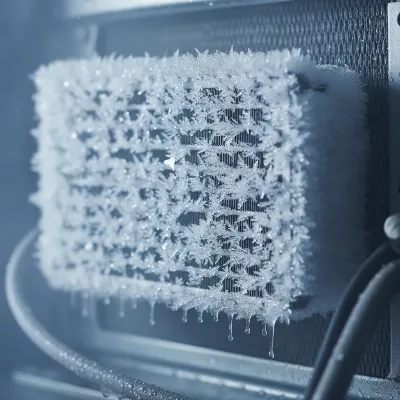 A close-up view of a frozen evaporator coil inside an air handler unit, covered in thick ice
When to Call a Professional
While many issues can be fixed DIY, some problems are beyond the scope of a typical homeowner and require a licensed HVAC technician:
- Low Refrigerant Levels or Leaks: Refrigerant is a hazardous chemical and requires specialized tools and training to handle, diagnose leaks, repair them, and recharge the system.
- Faulty Compressor: The compressor is the heart of your AC system. If it fails, the unit won’t cool. This is a complex and expensive repair best left to professionals.
- Electrical Problems (beyond a tripped breaker): Issues with capacitors, wiring, or the control board require an electrician or HVAC technician.
- Blower Motor Malfunction: If the indoor fan isn’t blowing air at all, or is making loud grinding noises, the motor might be failing.
- Persistent Freezing or No Cooling After DIY Fixes: If you’ve tried all the DIY steps and your AC still isn’t cooling, it’s time to call an expert.
Conclusion
Dealing with an air conditioner that isn’t cooling can be uncomfortable, but with this DIY guide, you now have the tools to tackle many common problems yourself. From checking your thermostat and replacing dirty air filters to clearing debris from your outdoor unit and thawing frozen coils, these steps can often restore your AC’s cooling power and save you money on professional service calls.
Regular maintenance is the cornerstone of a healthy air conditioning system, preventing many issues before they even start. However, it’s also crucial to recognize when a problem is beyond a simple DIY fix and warrants the expertise of a qualified HVAC professional. By understanding your air conditioner and performing basic upkeep, you can ensure a cool and comfortable home all season long. What other aspects of air conditioner maintenance do you find most challenging?
Frequently Asked Questions
Why is my AC running but not blowing cold air?
If your AC is running but the air isn’t cold, the most common culprits are a dirty air filter restricting airflow, incorrect thermostat settings, a dirty outdoor condenser unit hindering heat dissipation, or a frozen evaporator coil. Start by checking these simple issues, as they are often easy to fix yourself.
How often should I change my AC filter?
You should typically check your AC filter monthly and replace or clean it every 1 to 3 months. However, if you have pets, allergies, or live in a dusty environment, you might need to change it more frequently to maintain optimal airflow and air quality.
Can low refrigerant be fixed DIY?
No, low refrigerant levels should not be addressed as a DIY project. Refrigerant is a regulated chemical, and handling it requires specialized equipment, training, and certification. If your AC is low on refrigerant, it likely has a leak that needs to be located and repaired by a professional HVAC technician before the system can be properly recharged.
What does it mean if my AC unit is freezing up?
A frozen AC unit, particularly the evaporator coil, indicates a problem with insufficient airflow or a refrigerant issue. Common causes include a very dirty air filter, blocked return vents, a malfunctioning blower fan, or critically low refrigerant levels. Always turn off the unit and let it thaw completely before investigating further.
When should I call an HVAC professional?
You should call an HVAC professional if you’ve tried basic DIY troubleshooting steps (thermostat, filter, outdoor unit, circuit breaker) and your AC still isn’t cooling. Complex issues like refrigerant leaks, a faulty compressor, or advanced electrical problems require the specialized knowledge and tools of a certified technician to diagnose and repair safely and effectively.
Frequently Asked Questions
Why is my AC running but not blowing cold air?
If your AC is running but the air isn't cold, the most common culprits are a dirty air filter restricting airflow, incorrect thermostat settings, a dirty outdoor condenser unit hindering heat dissipation, or a frozen evaporator coil. Start by checking these simple issues, as they are often easy to fix yourself.
How often should I change my AC filter?
You should typically check your AC filter monthly and replace or clean it every 1 to 3 months. However, if you have pets, allergies, or live in a dusty environment, you might need to change it more frequently to maintain optimal airflow and air quality.
Can low refrigerant be fixed DIY?
No, low refrigerant levels should not be addressed as a DIY project. Refrigerant is a regulated chemical, and handling it requires specialized equipment, training, and certification. If your AC is low on refrigerant, it likely has a leak that needs to be located and repaired by a professional HVAC technician before the system can be properly recharged.
What does it mean if my AC unit is freezing up?
A frozen AC unit, particularly the evaporator coil, indicates a problem with insufficient airflow or a refrigerant issue. Common causes include a very dirty air filter, blocked return vents, a malfunctioning blower fan, or critically low refrigerant levels. Always turn off the unit and let it thaw completely before investigating further.
When should I call an HVAC professional?
You should call an HVAC professional if you've tried basic DIY troubleshooting steps (thermostat, filter, outdoor unit, circuit breaker) and your AC still isn't cooling. Complex issues like refrigerant leaks, a faulty compressor, or advanced electrical problems require the specialized knowledge and tools of a certified technician to diagnose and repair safely and effectively.
Get our weekly buyer guide
Practical specs, not advice. Unsubscribe anytime.

I tried all the DIY fixes when my unit wasn’t cooling, especially checking the outdoor condenser unit for blockages. I cleared some leaves and debris, and it helped a little, but it’s still not as cold as it used to be. I guess some problems just need a pro, but it was worth a shot.
My AC suddenly stopped cooling last week and I was dreading calling a technician. I checked the air filter like it suggested and it was absolutely caked with dust! Swapped it out and within an hour, my house was finally getting cool again. So glad I tried this first, saved me a ton of money.
The tip about checking the thermostat settings was a lifesaver! I honestly didn’t realize it could be set to ‘fan only’ by accident. A quick adjustment and my AC was back to blowing cold air. It’s amazing how a simple setting can cause such a headache.
I was worried about a frozen evaporator coil because my unit was making a weird noise and barely cooling. Following the steps to let it thaw out and then checking the airflow really did the trick. It’s running perfectly now and I avoided an expensive service call just by being patient and following the advice.