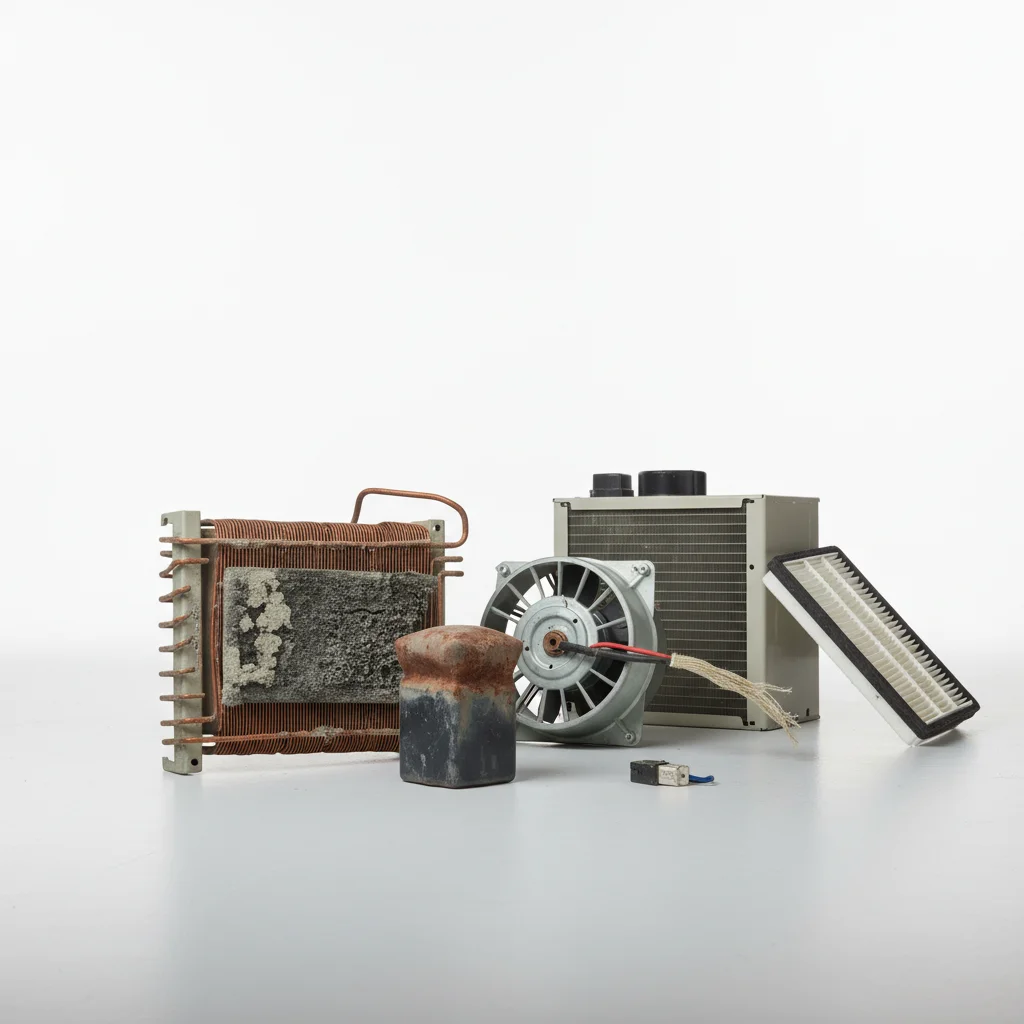
If your air conditioner is blowing warm air, it’s a frustrating problem that often points to one of five common issues. Understanding these potential causes can help you diagnose the problem and determine if a DIY fix is possible or if professional help is needed. From low refrigerant to a dirty air filter, addressing these issues promptly can restore your home’s cool comfort.
Low Refrigerant Levels
One of the most frequent reasons an air conditioner blows warm air is low refrigerant. Refrigerant is the chemical compound that absorbs heat from your indoor air and releases it outside. If your system is low on refrigerant, it’s usually due to a leak in the coils or lines. This isn’t a DIY fix; adding more refrigerant without addressing the leak will only be a temporary solution. A qualified HVAC technician can locate and repair the leak, then recharge the system to the correct levels. Signs of low refrigerant include ice buildup on the outdoor unit’s lines, a hissing sound, and higher energy bills.
Dirty Air Filter
A surprisingly common and easily fixable cause of warm air is a dirty air filter. A clogged filter restricts airflow, forcing your AC unit to work harder and potentially leading to the evaporator coil freezing over. When the coil freezes, it can’t absorb heat effectively, resulting in warm air being circulated. Check your air filter monthly and replace it every 1-3 months, depending on usage and household conditions (pets, allergies). This simple maintenance step can significantly improve your AC’s performance and efficiency.
- Check filter monthly for dirt and debris.
- Replace standard filters every 1-3 months.
- Consider higher MERV filters for better air quality, but ensure compatibility.
- A clean filter prevents coil freeze-up and improves airflow.
- Set a reminder for regular filter changes.
Malfunctioning Compressor
The compressor is the heart of your air conditioning system, responsible for circulating refrigerant and pressurizing it. If the compressor is failing or has completely stopped working, your AC will be unable to cool the air. You might hear a clicking sound when the unit tries to start, or no sound at all from the outdoor unit. A faulty compressor often requires professional diagnosis and replacement, which can be a significant repair. Regular maintenance can sometimes extend the life of your compressor, but eventually, mechanical failure can occur.
Thermostat Issues
Sometimes, the problem isn’t with the AC unit itself but with the thermostat. If your thermostat is set incorrectly, has dead batteries, or is malfunctioning, it might not be signaling the AC to cool properly. Ensure your thermostat is set to
Get our weekly buyer guide
Practical specs, not advice. Unsubscribe anytime.
