The best energy-efficient air conditioners in 2026 feature advanced inverter technology and high SEER2 ratings, typically 20 or above, to significantly reduce electricity consumption and provide consistent cooling. Leading brands like Carrier, Daikin, and Lennox offer models with variable-speed compressors that precisely match cooling loads, ensuring optimal comfort and substantial long-term savings for homeowners and businesses.
Overview of Air Conditioners
At its core, an air conditioner removes heat and humidity from an indoor space by circulating refrigerant through coils, absorbing heat indoors and releasing it outdoors. Air conditioning technology has evolved from rudimentary methods to sophisticated, intelligent systems. Early models were often energy-intensive, but continuous innovation has led to significant advancements in efficiency and environmental responsibility.
Modern energy-efficient air conditioners come in several forms. Central air conditioning systems cool entire homes through ductwork, ideal for larger residences. Split systems, with an indoor unit and an outdoor compressor, are perfect for cooling individual rooms or zones. Window units offer localized, budget-friendly cooling, while portable units provide flexibility. A pivotal development in energy efficiency across all types is inverter technology, which allows the compressor to adjust its speed rather than cycling on and off, leading to more consistent temperatures and significantly reduced energy consumption.
Guide to Choosing the Right Energy-Efficient Air Conditioner
Selecting an air conditioner is a significant investment that requires careful consideration of various factors to ensure optimal comfort and maximum energy savings. It’s about finding the perfect balance between your specific cooling needs and the unit’s efficiency capabilities.
Assess Your Usage Needs
Understanding your unique cooling requirements is paramount. The size of your room or space is critical for determining the necessary cooling capacity, measured in British Thermal Units (BTUs) or tonnage. An undersized unit will struggle to cool effectively and run constantly, wasting energy, while an oversized unit will cycle on and off too frequently, leading to uneven cooling, poor dehumidification, and premature wear. Consider the number of occupants, the frequency of use, and factors like ceiling height and direct sunlight exposure. Your local climate also plays a significant role; a unit designed for extreme humidity will differ from one optimized for dry heat.
Essential Energy-Saving Features
Modern air conditioners are packed with features aimed at enhancing both comfort and efficiency.
- Inverter Technology: This is arguably the most impactful energy-saving innovation. Unlike traditional compressors that operate at a fixed speed, inverter compressors can modulate their speed to match the cooling load precisely. This continuous operation at varying speeds avoids the energy spikes associated with frequent on/off cycling, resulting in substantial electricity savings and more stable temperatures.
- Efficiency Ratings (SEER/SEER2, EER/EER2): These ratings are your best indicators of an air conditioner’s energy performance.
- SEER (Seasonal Energy Efficiency Ratio) and SEER2: Measure cooling efficiency over an entire cooling season, with SEER2 being the updated standard (since 2023) reflecting more realistic testing conditions. A higher SEER2 rating, typically ranging from 13.4 to over 24, signifies greater efficiency and lower operating costs.
- EER (Energy Efficiency Ratio) and EER2: Indicate efficiency under peak cooling conditions (e.g., 95°F outdoor temperature). EER is crucial for assessing performance in extremely hot climates where units often operate at maximum capacity.
- Smart Features & Connectivity: Many energy-efficient models come with Wi-Fi connectivity, allowing remote control via smartphone apps. Features like programmable thermostats, eco-modes, and occupancy sensors can further optimize energy usage by adjusting settings based on your schedule and presence.
- Air Filtration & Dehumidification: Beyond cooling, superior air quality features, such as advanced filters (HEPA, anti-bacterial) and dedicated dehumidification modes, contribute to a healthier and more comfortable indoor environment, often reducing the perceived need for extremely low temperatures.
Comparing Reputable Air Conditioner Brands
|
Our Picks for the Best Air Conditioner in 2026
As an Amazon Associate I earn from qualifying purchases.
|
||
| Num | Product | Action |
|---|---|---|
| 1 | Evaporative Air Cooler with Remote & Timer, 2200+ CFM Portable Fan That Blows Cold Air for Large Room, Home Office, Bedroom - 2.1Gal High-Capacity Tank, 3 Modes, Whisper Quiet 30dB & Sleep Mode |

|
| 2 | Dreo Tower Fan for Bedroom, 42 Inch 120° Oscillating Fan, 25dB Quiet DC Motor, 28ft/s Velocity Bladeless Standing Fan with 12 Speeds, 4 Modes, 12H Timer Cooling Fans for Home, Living Room |
|
| 3 | BLACK+DECKER Window Air Conditioner 10000 BTU, AC Window Unit Cools Up to 450 Square Feet, Window AC Unit with Remote Control, 3 Cooling Speeds and Fan Only Function, BD10WT6, White |
|
| 4 | Dreo Tower Fan for Bedroom, 2026 Upgraded DC Motor, 28ft/s High Velocity, 20dB Ultra Quiet Standing Fan, 8 Speeds 4 Modes, 90° Oscillating Bladeless Fan for Indoors, Floor Fans with Remote, Black |
|
| 5 | Windowless Portable Air Conditioners with Remote, Ventless Ac Unit Ductless Air Cooler,Hoseless Quiet Evaporative Oscillating Swamp Cooler,12H Timer & 4 Ice Box for Room Indoor Outdoor Office Bedroom |
|
| 6 | 24" Windowless Portable Air Conditioner, 15H Timer & 120°Oscillation, 3-IN-1 Portable AC Unit with Remote, 2-Gal Tank, 3 Modes & 3 Speeds, Ultra-Quiet Ventless Swamp Cooler for Home Office, Off |
|
| 7 | SereneLife Portable Swamp Cooler Air Conditioner - 2500 CFM Airflow, 8 Gallon Water Tank Portable Evaporative Air Cooler for Room & Outdoors, WiFi, Humidifier & Fan Modes, Ice Packs & Remote Included |
|
| 8 | Portable Air Conditioners, 3-IN-1 Swamp Cooler, Evaporative Air Cooler,Remote & Touch Control, 90°+90° Oscillation,LED Screen, Air Coolong Fan for Outdoor Indoor |
|
| 9 | Midea 5,000 BTU EasyCool Small Window Air Conditioner - Cool up to 150 Sq. Ft. with Easy-to-Use Mechanical Controls and Reusable Filter, Perfect for Small Bedroom, Living Room, Home Office |
|
| 10 | Windowless Portable Air Conditioner, 24.4" Small Evaporative Air Cooler for Room No Window, 3-Speed Settings, 4 Modes, 7H Timer, Remote Control, 4 Ice Packs, Quiet AC Unit for Bedroom, White |
|
The air conditioner market is dominated by several reputable brands, each offering a range of energy-efficient models. Brands like Daikin, Lennox, and Carrier are often recognized for their cutting-edge inverter technology, high SEER2 ratings (some exceeding 20 SEER2), and comprehensive product lines that cater to various needs from residential to commercial. Mitsubishi Electric is highly regarded for its quiet operation and advanced multi-zone capabilities, often featuring high efficiency. LG and Samsung leverage their electronics expertise to integrate smart home features, robust inverter compressors, and stylish designs, offering competitive efficiency levels. Other strong contenders like Panasonic, Rheem, and American Standard also provide reliable, energy-efficient options known for their durability and customer support. When comparing, look beyond the brand name to the specific model’s SEER2/EER2 ratings, available features, warranty, and local service availability.
Leading Energy-Efficient Air Conditioners for 2026: A Snapshot
In the dynamic landscape of 2026, the focus on energy efficiency in air conditioning has never been stronger. Leading brands are consistently pushing the boundaries, offering models that not only provide superior cooling but also drastically reduce electricity consumption.
Brands like Carrier with its Infinity® series, Lennox with its Ultimate Comfort System, and Daikin’s high-efficiency inverter models stand out. These manufacturers integrate advanced variable-speed compressors, often achieving SEER2 ratings of 20 and above, representing some of the highest efficiencies on the market. Their systems are designed to modulate cooling output in precise increments, ensuring consistent temperatures without wasteful energy spikes. They often incorporate smart diagnostics, remote control capabilities, and sophisticated air purification systems. For instance, Carrier’s Greenspeed® Intelligence allows for ultra-precise temperature control, while Daikin is celebrated for its “super-efficiency” and environmental commitment, often using eco-friendly refrigerants.
Similarly, LG and Samsung offer models that blend high efficiency with smart home integration, allowing users to control and monitor energy usage via apps. Their dual inverter technology ensures rapid cooling and heating while minimizing power consumption. Panasonic continues to be a strong contender, known for its reliability, ease of use, and unique features like ECONAVI intelligent sensors that detect human presence and activity to adjust cooling automatically. These brands consistently feature high energy ratings and are often recognized for their quiet operation and enhanced air quality features.
> “The transition to higher SEER2 ratings and the widespread adoption of inverter technology are the most significant shifts in air conditioning for 2026. Consumers are now prioritizing long-term savings and environmental impact more than ever before.” – Dr. Elena Petrova, HVAC Systems Analyst
Expert Buying Guide: Avoiding Common Air Conditioner Mistakes
Even with the best intentions, purchasing an air conditioner can be fraught with common errors that undermine energy efficiency and overall satisfaction. Learning from these pitfalls can save you money, frustration, and ensure lasting comfort.
Pitfalls to Avoid When Buying an Air Conditioner
- Incorrect Sizing: This is perhaps the most common and costly mistake. An AC that is too small will run continuously, struggling to cool your home and leading to excessive energy bills. Conversely, an oversized unit will cool too quickly without properly removing humidity, resulting in a clammy, uncomfortable environment and frequent, inefficient short-cycling that shortens its lifespan. Always consult with a qualified HVAC professional to perform a load calculation tailored to your home’s specific characteristics.
- Overlooking Energy Ratings and Inverter Technology: Tempted by a lower upfront price, many buyers forgo models with higher SEER2/EER2 ratings or non-inverter technology. This almost always leads to significantly higher electricity bills over the unit’s lifespan, negating any initial savings. Prioritize inverter models with the highest energy ratings your budget allows for long-term savings.
- Ignoring Installation Quality and After-Sales Support: Even the most energy-efficient unit will underperform if installed improperly. Poor installation can lead to refrigerant leaks, incorrect duct sizing, and electrical issues, all of which compromise efficiency and durability. Additionally, neglecting to check warranty terms, parts availability, and the brand’s reputation for after-sales service can leave you stranded with costly repairs.
- Prioritizing Low Upfront Cost over Long-Term Savings: While initial cost is a factor, the true expense of an air conditioner is its total cost of ownership, which includes purchase price, installation, energy bills, and maintenance over its lifetime. Cheaper, less efficient units invariably lead to higher operational costs, making a slightly more expensive but highly efficient model a wiser investment in the long run.
Tips for Optimal Efficiency and Savings
Once you’ve chosen your energy-efficient air conditioner, how you use and maintain it further dictates its performance and your savings.
- Adjust Temperature Appropriately: Setting your thermostat to a reasonable temperature, generally between 75-78°F (24-26°C) during cooling, can significantly reduce energy consumption. Avoid drastic temperature drops.
- Regular Maintenance is Key: Schedule annual professional servicing to ensure your unit is clean, refrigerant levels are optimal, and all components are functioning correctly. Regularly clean or replace air filters according to manufacturer recommendations to maintain good airflow and efficiency.
- Utilize Smart Features: Make the most of programmable thermostats, sleep modes, and eco-settings. Use timers to cool your home only when needed, and consider zoning systems if you have unused areas.
- Complement with Passive Cooling: Combine your air conditioner with ceiling fans to create a wind-chill effect, allowing you to set your thermostat a few degrees higher without sacrificing comfort. Ensure your home has adequate insulation, seal drafts, and use window coverings to block direct sunlight, further reducing the cooling load on your AC.
Reviews of Specific Energy-Efficient Air Conditioner Models
While specific model numbers can quickly evolve, the innovations that define leading energy-efficient air conditioners in 2026 are consistent across top brands. You’ll find a strong emphasis on variable-speed compressors, which are the cornerstone of true energy efficiency. These advanced compressors, exemplified in high-SEER2 units from Daikin, Lennox, and Carrier, continuously adjust their output, allowing them to precisely match your home’s cooling needs and eliminate the wasteful on/off cycles of older systems.
Many premium models also boast sophisticated sensor technology, detecting everything from indoor occupancy to external weather conditions. This allows the unit to proactively optimize its operation, ensuring maximum comfort with minimal energy use. Expect to see enhanced air purification systems that go beyond basic filtration, incorporating features like plasma ionizers or advanced antimicrobial coatings to create a healthier indoor environment. Connectivity features are standard, robust smartphone apps offering detailed energy monitoring, diagnostic alerts, and integration with smart home ecosystems for seamless control. Some models even feature self-cleaning functions or durable, corrosion-resistant coils, extending the unit’s lifespan and reducing maintenance frequency.
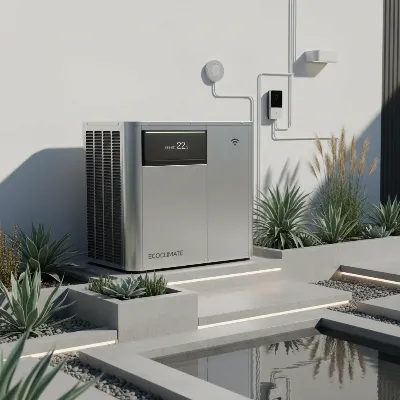 Modern energy efficient air conditioner unit outside a smart home
Conclusion
Choosing the best energy-efficient air conditioner in 2026 is an investment in both your comfort and your financial future. By understanding the core principles of efficiency, evaluating your specific needs, and considering the advanced features offered by leading brands, you can select a unit that not only keeps your home perfectly cool but also significantly reduces your energy footprint and utility bills. Remember, a higher upfront cost for a truly efficient model often translates into substantial long-term savings.
Don’t let the complexity of options deter you. Take the time to research, prioritize efficiency ratings and inverter technology, and always consult with a trusted HVAC professional. Investing wisely in an energy-efficient air conditioner ensures a comfortable, healthy, and economically sound living environment for years to come. What steps will you take today to make your home a cooler, more efficient sanctuary?
Frequently Asked Questions
What are the key efficiency ratings for air conditioners in 2026?
The primary efficiency ratings are SEER2 (Seasonal Energy Efficiency Ratio 2) and EER2 (Energy Efficiency Ratio 2). SEER2 measures seasonal cooling performance, while EER2 assesses efficiency under peak heat conditions. Higher numbers in both indicate greater energy efficiency and lower operating costs.
How much energy can an inverter air conditioner save compared to a non-inverter model?
Inverter air conditioners can save significant energy, often 30-50% or more, compared to non-inverter models. This is because their variable-speed compressors adjust output precisely to cooling demand, avoiding the frequent, energy-intensive on/off cycling of traditional units.
Is it always worth buying an air conditioner with a higher SEER2 rating, even if it costs more?
Generally, yes. While models with higher SEER2 ratings have a greater upfront cost, they offer substantial savings on electricity bills over their lifespan. For homeowners who plan to stay in their homes for many years or use their AC frequently, the long-term energy savings often outweigh the initial investment.
How important is proper sizing when buying an energy-efficient air conditioner?
Proper sizing is critically important. An undersized unit will overwork, constantly running and consuming excess energy. An oversized unit will short-cycle, leading to uneven cooling, poor dehumidification, and increased wear and tear. Always have a professional perform a load calculation to determine the correct capacity for your space.
What maintenance is essential for an energy-efficient air conditioner?
Regular maintenance is crucial for optimal efficiency. This includes annual professional servicing, where a technician checks refrigerant levels and cleans coils. Homeowners should also regularly clean or replace air filters as recommended by the manufacturer to ensure good airflow and prevent efficiency loss.
Can smart features truly improve an air conditioner’s energy efficiency?
Yes, smart features can significantly enhance energy efficiency. Programmable thermostats, eco-modes, and occupancy sensors allow the unit to operate only when needed and adjust settings based on real-time conditions. Remote control via smartphone apps also enables users to manage their AC from anywhere, preventing unnecessary operation.
Frequently Asked Questions
What are the key efficiency ratings for air conditioners in 2026?
The primary efficiency ratings are SEER2 (Seasonal Energy Efficiency Ratio 2) and EER2 (Energy Efficiency Ratio 2). SEER2 measures seasonal cooling performance, while EER2 assesses efficiency under peak heat conditions. Higher numbers in both indicate greater energy efficiency and lower operating costs.
How much energy can an inverter air conditioner save compared to a non-inverter model?
Inverter air conditioners can save significant energy, often 30-50% or more, compared to non-inverter models. This is because their variable-speed compressors adjust output precisely to cooling demand, avoiding the frequent, energy-intensive on/off cycling of traditional units.
Is it always worth buying an air conditioner with a higher SEER2 rating, even if it costs more?
Generally, yes. While models with higher SEER2 ratings have a greater upfront cost, they offer substantial savings on electricity bills over their lifespan. For homeowners who plan to stay in their homes for many years or use their AC frequently, the long-term energy savings often outweigh the initial investment.
How important is proper sizing when buying an energy-efficient air conditioner?
Proper sizing is critically important. An undersized unit will overwork, constantly running and consuming excess energy. An oversized unit will short-cycle, leading to uneven cooling, poor dehumidification, and increased wear and tear. Always have a professional perform a load calculation to determine the correct capacity for your space.
What maintenance is essential for an energy-efficient air conditioner?
Regular maintenance is crucial for optimal efficiency. This includes annual professional servicing, where a technician checks refrigerant levels and cleans coils. Homeowners should also regularly clean or replace air filters as recommended by the manufacturer to ensure good airflow and prevent efficiency loss.
Can smart features truly improve an air conditioner's energy efficiency?
Yes, smart features can significantly enhance energy efficiency. Programmable thermostats, eco-modes, and occupancy sensors allow the unit to operate only when needed and adjust settings based on real-time conditions. Remote control via smartphone apps also enables users to manage their AC from anywhere, preventing unnecessary operation.
How to Choose an Energy-Efficient Air Conditioner
Selecting the right energy-efficient air conditioner involves assessing your cooling needs, understanding efficiency ratings, and considering advanced features to ensure optimal comfort and long-term savings.
Determine the size of your room or space to calculate the necessary cooling capacity in BTUs or tonnage. Consider factors like the number of occupants, frequency of use, ceiling height, direct sunlight exposure, and your local climate to avoid incorrect sizing.
Look for units with inverter technology, which allows the compressor to modulate its speed for precise cooling and significant energy savings. Check for high SEER2 (Seasonal Energy Efficiency Ratio 2) and EER2 (Energy Efficiency Ratio 2) ratings, as higher numbers indicate greater efficiency.
Consider models with Wi-Fi connectivity, programmable thermostats, eco-modes, and occupancy sensors for optimized energy usage. Compare reputable brands like Daikin, Lennox, Carrier, Mitsubishi Electric, LG, and Samsung, focusing on their specific model's SEER2/EER2 ratings, features, warranty, and local service availability.
Do not overlook proper sizing, as an incorrectly sized unit will lead to inefficiency and discomfort. Prioritize long-term savings over low upfront costs, and ensure professional installation and reliable after-sales support to maximize your unit's performance and lifespan.
Set your thermostat to a reasonable temperature (75-78u00b0F or 24-26u00b0C) during cooling. Schedule annual professional maintenance and regularly clean or replace air filters. Utilize smart features and complement your AC with passive cooling methods like ceiling fans and good insulation to further reduce energy consumption.
Get our weekly buyer guide
Practical specs, not advice. Unsubscribe anytime.

I finally upgraded to a new Carrier model with a SEER2 rating of 22, and the difference is incredible. My old unit was a power hog, but this one barely makes a dent in my electricity bill. It keeps the whole house consistently cool without those annoying temperature swings. Definitely worth the investment for the long-term savings.
I got a Lennox system with inverter technology, hoping for big savings. While it does cool well and is pretty quiet, I haven’t seen the drastic reduction in my electricity bill that I was expecting. Maybe my old unit wasn’t as inefficient as I thought, or perhaps my usage habits need to change. It’s good, but not a game-changer for me.
We went with a Daikin unit after reading about their variable-speed compressors. It’s so much quieter than our old AC, and the cooling is really even throughout the house. I’ve noticed a definite drop in our energy usage, which is a huge plus. My only minor complaint is that the initial installation was a bit more complex than I anticipated.
After dealing with an ancient, noisy AC for years, getting a new energy-efficient model has been a revelation. The consistent cooling without the constant on-off cycling is amazing. I appreciate how these modern systems really focus on reducing electricity consumption, making them much more environmentally friendly and wallet-friendly.