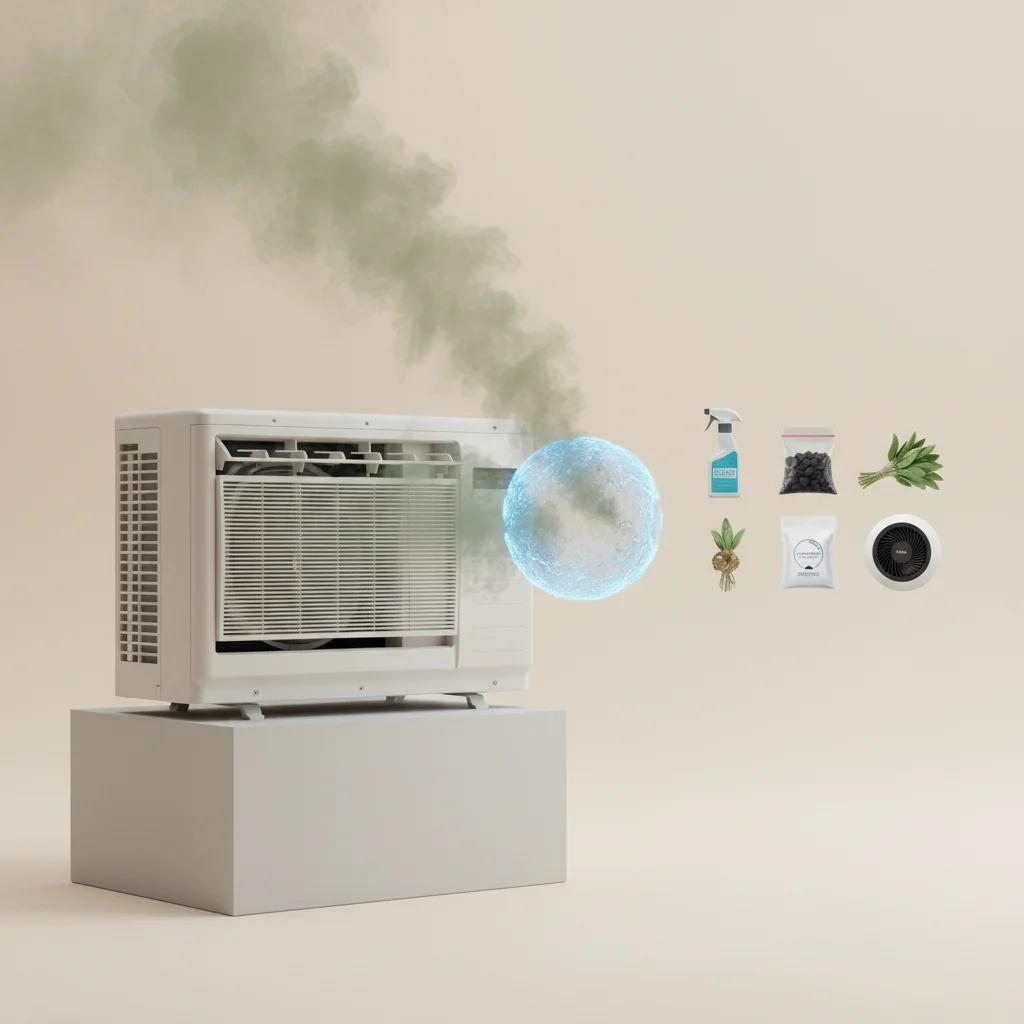
If your air conditioner smells musty, it’s a common problem often caused by mold or mildew buildup within the unit or ductwork. This unpleasant odor indicates a need for cleaning and can affect your indoor air quality. Fortunately, there are five effective ways to eliminate these musty smells and restore fresh air to your home.
Why Your AC Develops a Musty Smell
A musty odor from your air conditioner typically signals the presence of mold, mildew, or bacteria. These microorganisms thrive in dark, damp environments, making your AC’s evaporator coil, drain pan, and ductwork prime breeding grounds. When the AC runs, it circulates these airborne spores and their associated odors throughout your home. High humidity levels, infrequent filter changes, and clogged condensate drains are major contributors to this issue.
Clean or Replace Your Air Filter
The first and simplest step to address a musty smell is to inspect and clean or replace your air filter. A dirty filter restricts airflow and can trap moisture and mold spores, contributing to the odor. Replace disposable filters every 1-3 months, especially during peak cooling seasons. For reusable filters, wash them thoroughly with warm, soapy water, rinse, and allow them to dry completely before reinserting.
Clean the Condensate Drain Pan and Line
The condensate drain pan collects moisture removed from the air, and if it’s not draining properly, standing water can become a breeding ground for mold and mildew. Locate your indoor unit’s drain pan and inspect it for standing water or slime. You can clean it by pouring a mixture of one cup of distilled white vinegar and one cup of water down the condensate drain line. This solution helps kill mold and clear minor clogs. Repeat this process quarterly for prevention.
Deep Clean the Evaporator Coils
|
Our Picks for the Best Air Conditioner in 2026
As an Amazon Associate I earn from qualifying purchases.
|
||
| Num | Product | Action |
|---|---|---|
| 1 | Dreo Tower Fan for Bedroom, 2026 Upgraded DC Motor, 28ft/s High Velocity, 20dB Ultra Quiet Standing Fan, 8 Speeds 4 Modes, 90° Oscillating Bladeless Fan for Indoors, Floor Fans with Remote, Black |

|
| 2 | Evaporative Air Cooler with Remote & Timer, 2200+ CFM Portable Fan That Blows Cold Air for Large Room, Home Office, Bedroom - 2.1Gal High-Capacity Tank, 3 Modes, Whisper Quiet 30dB & Sleep Mode |
|
| 3 | Portable Air Conditioners, 3-IN-1 Swamp Cooler, Evaporative Air Cooler,Remote & Touch Control, 90°+90° Oscillation,LED Screen, Air Coolong Fan for Outdoor Indoor |
|
| 4 | Midea 5,000 BTU EasyCool Small Window Air Conditioner - Cool up to 150 Sq. Ft. with Easy-to-Use Mechanical Controls and Reusable Filter, Perfect for Small Bedroom, Living Room, Home Office |
|
| 5 | Windowless Portable Air Conditioner, 24.4" Small Evaporative Air Cooler for Room No Window, 3-Speed Settings, 4 Modes, 7H Timer, Remote Control, 4 Ice Packs, Quiet AC Unit for Bedroom, White |
|
| 6 | Windowless Portable Air Conditioners with Remote, Ventless Ac Unit Ductless Air Cooler,Hoseless Quiet Evaporative Oscillating Swamp Cooler,12H Timer & 4 Ice Box for Room Indoor Outdoor Office Bedroom |
|
| 7 | 24" Windowless Portable Air Conditioner, 15H Timer & 120°Oscillation, 3-IN-1 Portable AC Unit with Remote, 2-Gal Tank, 3 Modes & 3 Speeds, Ultra-Quiet Ventless Swamp Cooler for Home Office, Off |
|
| 8 | SereneLife Portable Swamp Cooler Air Conditioner - 2500 CFM Airflow, 8 Gallon Water Tank Portable Evaporative Air Cooler for Room & Outdoors, WiFi, Humidifier & Fan Modes, Ice Packs & Remote Included |
|
| 9 | Dreo Tower Fan for Bedroom, 42 Inch 120° Oscillating Fan, 25dB Quiet DC Motor, 28ft/s Velocity Bladeless Standing Fan with 12 Speeds, 4 Modes, 12H Timer Cooling Fans for Home, Living Room |
|
| 10 | BLACK+DECKER Window Air Conditioner 10000 BTU, AC Window Unit Cools Up to 450 Square Feet, Window AC Unit with Remote Control, 3 Cooling Speeds and Fan Only Function, BD10WT6, White |
|
The evaporator coils are where the cooling process happens, and they can accumulate dirt, dust, and moisture, leading to mold growth. While a professional cleaning is often recommended for thoroughness, you can perform a basic cleaning yourself. Turn off the power to your AC unit. Use a soft brush or a coil cleaning spray specifically designed for AC coils. Follow the product instructions carefully, ensuring the coils are dry before restoring power.
Address Ductwork Issues and Humidity
Mold and mildew can also grow within your home’s ductwork, especially if there are leaks or areas with high humidity. Consider having your ducts professionally inspected and cleaned if the musty smell persists after cleaning the AC unit itself. Additionally, maintaining proper indoor humidity levels (ideally between 30-50%) can significantly reduce mold growth. A dehumidifier can be a valuable tool in humid climates. Ensure your home is properly sealed to prevent moisture intrusion.
- Regularly check and replace air filters.
- Clean the condensate drain pan and line quarterly.
- Inspect and clean evaporator coils annually.
- Maintain indoor humidity between 30-50%.
- Consider professional duct cleaning every 3-5 years.
When to Call a Professional
If you’ve tried these DIY solutions and the musty smell persists, or if you notice visible mold growth that is extensive, it’s time to call a qualified HVAC technician. They can perform a more thorough inspection, identify hidden mold sources, and conduct a deep cleaning of your entire system, including the blower motor and ductwork. They can also check for refrigerant leaks or other mechanical issues that might be contributing to excessive moisture.
Get our weekly buyer guide
Practical specs, not advice. Unsubscribe anytime.
