Ductless mini split air conditioners offer a sophisticated solution for targeted comfort, remarkable energy efficiency, and flexible installation, often outperforming traditional HVAC systems. These systems provide independent temperature control in different zones or rooms, making them ideal for homes seeking customized climate control and lower energy bills. Modern mini splits integrate advanced inverter technology and increasingly use lower global warming potential (GWP) refrigerants like R-32 or R-454B, aligning with environmental sustainability goals and 2026 federal regulations requiring a minimum 14.3 SEER2 rating.
Understanding Ductless Mini Split Air Conditioners
A ductless mini split air conditioner is an innovative heating and cooling system that does not rely on extensive ductwork. Instead, it comprises an outdoor compressor/condenser unit and one or more indoor air-handling units, connected by a small conduit that houses refrigerant lines, power cables, and a condensate drain. This design allows for independent temperature control in different zones or rooms, a significant advantage over conventional central air systems.
The evolution of mini splits has been driven by a demand for greater efficiency and flexibility. Historically, cooling was often an all-or-nothing affair with central air, or a localized, noisy solution with window units. Mini splits emerged as a refined alternative, offering zoned comfort and superior energy savings. Modern mini splits integrate advanced inverter technology, making them incredibly efficient by modulating compressor speed to precisely match the cooling or heating load, avoiding the energy-intensive on/off cycles of older systems. They also increasingly feature lower global warming potential (GWP) refrigerants, aligning with environmental sustainability goals and regulatory changes.
Mini split systems come in various configurations tailored to different needs. A single-zone mini split pairs one outdoor unit with one indoor unit, perfect for conditioning a specific room addition, garage, or office space. For larger homes or multiple areas requiring independent control, multi-zone mini splits connect a single outdoor unit to several indoor units, each operating autonomously. Most contemporary mini splits function as heat pumps, providing both efficient cooling in the summer and effective heating in colder months, often performing well even in sub-zero temperatures.
How to Choose the Right Ductless Mini Split for Your Home
Selecting the ideal ductless mini split involves more than just picking a brand; it requires a careful assessment of your specific environment and comfort preferences. Understanding your needs, the critical features, and the market’s leading brands will streamline your decision-making process.
Assessing Your Cooling and Heating Needs
The first step is to accurately determine the heating and cooling load of the space you wish to condition. Mis-sizing a unit is a common mistake that leads to inefficiency and discomfort, whether the unit is too large and cycles frequently or too small and struggles to keep up.
To properly size your system, consider the room’s square footage, ceiling height, insulation quality, window area, and sun exposure. A general guideline for typical U.S. homes is:
- Up to 250 sq ft: approximately 6,000 BTU
- 250–400 sq ft: approximately 9,000 BTU
- 400–550 sq ft: approximately 12,000 BTU
- 550–800 sq ft: approximately 18,000 BTU
- 800–1,200 sq ft: approximately 24,000 BTU
- 1,200–1,500 sq ft: approximately 30,000 BTU
Your climate significantly impacts the type of mini split you need. In hot and humid regions, prioritize high SEER2 ratings and excellent dehumidification capabilities. For cold climates where the mini split will serve as a primary heat source, look for models with strong cold-climate performance ratings (HSPF2) and “Hyper-Heat” or similar technologies that maintain capacity in low outdoor temperatures. Finally, consider your usage patterns. Will the unit run continuously in a heavily used living space, or intermittently in a guest bedroom? This dictates the required durability and advanced features.
Essential Features and Technologies to Prioritize
|
Our Picks for the Best Air Conditioner in 2026
As an Amazon Associate I earn from qualifying purchases.
|
||
| Num | Product | Action |
|---|---|---|
| 1 | SereneLife Portable Swamp Cooler Air Conditioner - 2500 CFM Airflow, 8 Gallon Water Tank Portable Evaporative Air Cooler for Room & Outdoors, WiFi, Humidifier & Fan Modes, Ice Packs & Remote Included |

|
| 2 | Dreo Tower Fan for Bedroom, 2026 Upgraded DC Motor, 28ft/s High Velocity, 20dB Ultra Quiet Standing Fan, 8 Speeds 4 Modes, 90° Oscillating Bladeless Fan for Indoors, Floor Fans with Remote, Black |
|
| 3 | Evaporative Air Cooler with Remote & Timer, 2200+ CFM Portable Fan That Blows Cold Air for Large Room, Home Office, Bedroom - 2.1Gal High-Capacity Tank, 3 Modes, Whisper Quiet 30dB & Sleep Mode |
|
| 4 | Windowless Portable Air Conditioner, 24.4" Small Evaporative Air Cooler for Room No Window, 3-Speed Settings, 4 Modes, 7H Timer, Remote Control, 4 Ice Packs, Quiet AC Unit for Bedroom, White |
|
| 5 | Portable Air Conditioners, 3-IN-1 Swamp Cooler, Evaporative Air Cooler,Remote & Touch Control, 90°+90° Oscillation,LED Screen, Air Coolong Fan for Outdoor Indoor |
|
| 6 | BLACK+DECKER Window Air Conditioner 10000 BTU, AC Window Unit Cools Up to 450 Square Feet, Window AC Unit with Remote Control, 3 Cooling Speeds and Fan Only Function, BD10WT6, White |
|
| 7 | 24" Windowless Portable Air Conditioner, 15H Timer & 120°Oscillation, 3-IN-1 Portable AC Unit with Remote, 2-Gal Tank, 3 Modes & 3 Speeds, Ultra-Quiet Ventless Swamp Cooler for Home Office, Off |
|
| 8 | Windowless Portable Air Conditioners with Remote, Ventless Ac Unit Ductless Air Cooler,Hoseless Quiet Evaporative Oscillating Swamp Cooler,12H Timer & 4 Ice Box for Room Indoor Outdoor Office Bedroom |
|
| 9 | Dreo Tower Fan for Bedroom, 42 Inch 120° Oscillating Fan, 25dB Quiet DC Motor, 28ft/s Velocity Bladeless Standing Fan with 12 Speeds, 4 Modes, 12H Timer Cooling Fans for Home, Living Room |
|
| 10 | Midea 5,000 BTU EasyCool Small Window Air Conditioner - Cool up to 150 Sq. Ft. with Easy-to-Use Mechanical Controls and Reusable Filter, Perfect for Small Bedroom, Living Room, Home Office |
|
Modern mini splits come packed with technologies designed to enhance comfort and efficiency. Knowing which features matter most will help you narrow down your choices.
Energy Efficiency Ratings (SEER2, EER2, HSPF2) are paramount. The Seasonal Energy Efficiency Ratio 2 (SEER2) measures cooling efficiency, the Energy Efficiency Ratio 2 (EER2) measures cooling efficiency at peak load, and the Heating Seasonal Performance Factor 2 (HSPF2) measures heating efficiency. Higher numbers indicate better efficiency and lower operating costs. In 2026, federal regulations require mini splits to meet a minimum 14.3 SEER2 rating in most of the U.S.
Inverter technology is a cornerstone of modern mini splits, offering superior efficiency and comfort. Unlike conventional compressors that cycle on and off, inverter-driven compressors adjust their speed to precisely match the heating or cooling demand. This variable-speed operation prevents temperature fluctuations, reduces energy consumption, and extends the lifespan of the unit.
The landscape of refrigerants is evolving. Due to the U.S. AIM Act, high-GWP refrigerants like R-410A are being phased down. New systems in 2026 are increasingly utilizing lower-GWP alternatives such as R-32 or R-454B. Opting for a system with these newer refrigerants ensures future compliance and reduced environmental impact.
Many top models now offer advanced smart home integration and controls. Wi-Fi connectivity allows you to manage your mini split from anywhere using a smartphone app, often integrating with voice assistants like Google Assistant or Amazon Alexa. Features like programmable schedules, remote diagnostics, and energy monitoring enhance convenience and energy savings.
For ultimate comfort, consider noise levels and air quality features. Brands like Fujitsu and Mitsubishi are renowned for their whisper-quiet indoor units, making them ideal for bedrooms and home offices. Some mini splits also incorporate advanced air filtration systems, removing allergens, dust, and odors to improve indoor air quality.
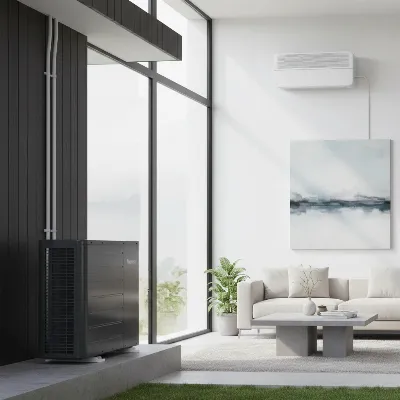 Ductless mini split outdoor and indoor unit installed on a modern home exterior.
Top Ductless Mini Split Brands: A Comparative Overview
The 2026 mini split market is vibrant, with several brands leading the charge in different categories.
Mitsubishi Electric remains the gold standard for overall performance, longevity, and reliability. Their Hyper-Heat systems are celebrated for maintaining full heating capacity even in extreme cold. They represent a premium choice for homeowners seeking long-term value and robust performance.
Daikin, as one of the world’s largest HVAC manufacturers, excels in whole-home ductless solutions, offering a wide product lineup with strong SEER2 ratings and quiet indoor air handlers. Daikin systems are known for advanced inverter control and consistent comfort in diverse climates.
For those prioritizing quiet operation, Fujitsu mini splits consistently rank high. They deliver ultra-quiet indoor comfort coupled with strong cold-climate performance and reliable inverter compressors, making them perfect for noise-sensitive areas.
LG HVAC stands out for its sleek designs and strong smart-home integration. Their Wi-Fi enabled systems and modern aesthetics blend seamlessly into contemporary living spaces, offering competitive efficiency ratings.
For homeowners looking for DIY-friendly options, MRCOOL has carved out a niche as the leader. Their DIY 5th Gen Series features pre-charged Quick-Connect line sets, simplifying installation without the need for specialized HVAC tools or refrigerant handling. Similarly, Zone Air has emerged as a clear winner for DIY enthusiasts in 2026, offering high SEER2 efficiency and straightforward setup.
Brands like Gree and Pioneer offer excellent value. Gree is a global manufacturer known for competitive pricing and strong efficiency, making it a solid choice for budget-conscious buyers. Pioneer provides reliable performance, particularly with its Quantum Ultra Series for flexible installation (floor/ceiling) and its Inverter+ line for quiet operation. Panasonic is notable for its air quality technology and commitment to ongoing improvement, offering both single and multi-zone systems.
Comparing Top Ductless Mini Split Models for 2026
The best ductless mini split systems of 2026 offer a blend of advanced features, high efficiency, and reliable performance. Here’s a look at some of the standout models and what makes them excellent choices:
| Model / Series | Key Features | SEER2 Range | HSPF2 Range | Zone Type | Best For |
|---|---|---|---|---|---|
| Mitsubishi GX Series | Premium performance, quiet operation, Hyper-Heat (cold climates), high reliability, advanced inverter. | 22-33 | 10.5-13.5 | Single/Multi | Premium comfort, extreme cold climates, quiet performance. |
| Daikin AURORA Series | High efficiency, robust heating down to -13°F, advanced inverter control, wide product line. | 20-24 | 10-12 | Single/Multi | Whole-home solutions, cold climates, superior efficiency. |
| Fujitsu Halcyon Series | Ultra-quiet operation, strong cold-climate performance, reliable compressors, energy efficient. | 20-25 | 10-12.5 | Single/Multi | Bedrooms, offices, noise-sensitive areas. |
| MRCOOL DIY 5th Gen Series | DIY installation (pre-charged line sets), Wi-Fi control, Energy Star certified, refrigerant leak detection. | 22-24 | 10.5-12 | Single/Multi | Homeowners seeking self-installation, budget-friendly. |
| Zone Air DIY Series | High SEER2 efficiency (up to 24), fast shipping, expert support, easy connections, pre-charged lines. | Up to 24 | N/A | Single/Multi | DIY enthusiasts, blend of comfort and convenience. |
| Pioneer Diamante Pro Series | High efficiency, inverter technology, cooling, heating, ventilation, dehumidification. | 22-25 | 10.5-12.5 | Single | High-efficiency, solid performance across diverse climates. |
| LG Art Cool Premier | Sleek design, smart-home integration, high efficiency, powerful heating/cooling. | 21-28 | 10.5-13 | Single/Multi | Modern aesthetics, smart features, energy-conscious. |
Recommendations for various needs:
- For the Ultimate Performance and Cold Climates: The Mitsubishi GX Series is unmatched, offering industry-leading efficiency and heating capabilities that defy frigid temperatures.
- For Whole-Home Efficiency: Daikin’s AURORA series provides comprehensive solutions with exceptional efficiency and refined control across multiple zones.
- For Whisper-Quiet Comfort: Fujitsu Halcyon models are the go-to, ensuring peace and quiet in any room, alongside robust performance.
- For the Savvy DIY Homeowner: Both MRCOOL DIY 5th Gen and Zone Air DIY Series offer excellent options to save on installation costs, providing effective cooling and heating with user-friendly setups.
- For Best Value: Gree and Pioneer systems offer competitive performance and features at a more accessible price point, providing a great balance of cost and efficiency.
Expert Insights for Purchasing and Maximizing Your Mini Split
Making a smart investment in a ductless mini split goes beyond comparing specs. It involves avoiding common pitfalls and adopting practices that ensure long-term efficiency and comfort.
Common Pitfalls to Avoid When Buying a Mini Split
One of the most frequent errors homeowners make is incorrect sizing. Choosing a unit with too many BTUs for the room can lead to “short cycling,” where the unit turns on and off frequently, wasting energy and failing to properly dehumidify the air. Conversely, an undersized unit will run constantly, struggling to reach desired temperatures and leading to higher energy bills and premature wear. Always perform a thorough load calculation for each zone.
Another significant oversight is ignoring installation requirements. While DIY mini splits like MRCOOL and Zone Air are becoming popular, many traditional units require professional installation by a certified HVAC technician. Attempting a complex installation yourself can void warranties, lead to refrigerant leaks, and result in inefficient operation. Always factor professional installation costs into your budget if choosing a non-DIY system.
Lastly, some buyers focus solely on the upfront price, overlooking long-term costs and warranties. A cheaper unit might have lower efficiency ratings, leading to higher electricity bills over its lifespan. Moreover, a robust warranty (on parts and compressor) provides peace of mind and protection against unexpected repairs. Always register your warranty after installation.
> “A ductless mini split system, when correctly sized and professionally installed, is one of the most efficient and adaptable HVAC solutions available today. Prioritizing efficiency and a solid warranty will serve you well in the long run.” – Alex Tan, Lead HVAC Technician, reviewtenda.com
Tips for Efficient Operation and Maintenance
Once you have your mini split, optimizing its operation and performing regular maintenance can significantly extend its lifespan and maximize energy savings.
- Optimal Temperature Settings: Aim for a comfortable yet conservative temperature, typically around 75°F (24°C) in summer and 68°F (20°C) in winter. Avoid drastic temperature changes, as the unit works most efficiently when maintaining a consistent temperature.
- Regular Cleaning and Filter Replacement: The indoor unit’s air filters should be cleaned monthly or as recommended by the manufacturer. Dirty filters restrict airflow, reduce efficiency, and can impact air quality. Periodically clean the outdoor coil to ensure proper heat exchange.
- Utilizing Smart Features and Zoning: Take advantage of programmable timers, occupancy sensors, and Wi-Fi controls to schedule operation based on your daily routine. With multi-zone systems, use the zoning capabilities to cool or heat only the occupied rooms, further reducing energy waste.
- Combining with Other Cooling Methods: In conjunction with ceiling fans, you can often raise your thermostat setting by a few degrees without sacrificing comfort, leading to additional energy savings. Ensuring your home is well-insulated also helps the mini split operate more efficiently.
Conclusion
The landscape of home climate control in 2026 clearly favors ductless mini split air conditioners for their unparalleled efficiency, flexible zoning capabilities, and innovative features. From the quiet operation of a Fujitsu to the robust heating power of a Mitsubishi, or the DIY convenience of a MRCOOL or Zone Air system, there’s a perfect solution for every homeowner. By carefully considering your specific needs, prioritizing energy efficiency, understanding the latest refrigerant standards, and choosing a reputable brand, you can invest in a system that delivers superior comfort and significant savings for years to come. What kind of comfort upgrade are you dreaming of for your home?
Frequently Asked Questions
What is the average lifespan of a ductless mini-split AC?
A well-maintained ductless mini split system typically lasts between 10 to 15 years, with some premium brands extending beyond 20 years. Factors like installation quality, usage patterns, and regular maintenance play a significant role in determining its longevity.
Can a mini-split system heat a whole house in a cold climate?
Yes, many modern mini split heat pumps, especially those designed for cold climates (e.g., Mitsubishi Hyper-Heat), can efficiently heat an entire home, even in sub-zero temperatures. However, in extremely harsh climates or older, poorly insulated homes, some homeowners may keep a backup heating source.
Are ductless mini-splits noisy?
No, one of the key advantages of ductless mini splits is their quiet operation. The loudest component, the compressor, is located outside, while the indoor units typically operate at noise levels comparable to a quiet refrigerator, making them ideal for bedrooms and living areas.
What is the difference between SEER and SEER2 ratings?
SEER2 (Seasonal Energy Efficiency Ratio 2) is a newer standard for measuring cooling efficiency that better reflects real-world HVAC performance compared to the older SEER rating. SEER2 tests are conducted under different static pressure conditions, making them more accurate.
Do mini-splits require special electrical wiring?
Yes, most mini split systems require a dedicated 240-volt electrical circuit, similar to a clothes dryer or electric oven, for the outdoor unit. It’s crucial to consult with a qualified electrician to ensure your home’s electrical panel can support the new system and to ensure safe installation.
Can I install a ductless mini-split myself?
While some brands like MRCOOL and Zone Air offer DIY-friendly mini split kits with pre-charged line sets, most mini splits require professional installation. Improper installation can lead to refrigerant leaks, reduced efficiency, voided warranties, and potential safety hazards.
How often should I clean my mini-split filters?
It is generally recommended to clean the reusable air filters in your indoor mini split unit monthly, or more frequently if you have pets or allergies. Regular cleaning ensures optimal airflow, efficiency, and indoor air quality.
Frequently Asked Questions
What is the average lifespan of a ductless mini-split AC?
A well-maintained ductless mini split system typically lasts between 10 to 15 years, with some premium brands extending beyond 20 years. Factors like installation quality, usage patterns, and regular maintenance play a significant role in determining its longevity.
Can a mini-split system heat a whole house in a cold climate?
Yes, many modern mini split heat pumps, especially those designed for cold climates (e.g., Mitsubishi Hyper-Heat), can efficiently heat an entire home, even in sub-zero temperatures. However, in extremely harsh climates or older, poorly insulated homes, some homeowners may keep a backup heating source.
Are ductless mini-splits noisy?
No, one of the key advantages of ductless mini splits is their quiet operation. The loudest component, the compressor, is located outside, while the indoor units typically operate at noise levels comparable to a quiet refrigerator, making them ideal for bedrooms and living areas.
What is the difference between SEER and SEER2 ratings?
SEER2 (Seasonal Energy Efficiency Ratio 2) is a newer standard for measuring cooling efficiency that better reflects real-world HVAC performance compared to the older SEER rating. SEER2 tests are conducted under different static pressure conditions, making them more accurate.
Do mini-splits require special electrical wiring?
Yes, most mini split systems require a dedicated 240-volt electrical circuit, similar to a clothes dryer or electric oven, for the outdoor unit. It's crucial to consult with a qualified electrician to ensure your home's electrical panel can support the new system and to ensure safe installation.
How often should I clean my mini-split filters?
It is generally recommended to clean the reusable air filters in your indoor mini split unit monthly, or more frequently if you have pets or allergies. Regular cleaning ensures optimal airflow, efficiency, and indoor air quality.
How to Choose the Right Ductless Mini Split for Your Home
Selecting the ideal ductless mini split involves assessing your specific environment, comfort preferences, and understanding critical features and leading brands.
Accurately determine the heating and cooling load of the space you wish to condition. Consider room square footage, ceiling height, insulation, window area, and sun exposure to properly size the unit. Mis-sizing can lead to inefficiency and discomfort.
Focus on Energy Efficiency Ratings (SEER2, EER2, HSPF2), inverter technology, and lower-GWP refrigerants like R-32 or R-454B. Also, consider smart home integration, low noise levels, and advanced air quality features for enhanced comfort and efficiency.
Evaluate brands like Mitsubishi Electric for premium performance, Daikin for whole-home solutions, Fujitsu for quiet operation, LG HVAC for smart integration, and MRCOOL or Zone Air for DIY-friendly options. Gree and Pioneer offer excellent value for budget-conscious buyers.
Prevent errors such as incorrect sizing, ignoring installation requirements (especially for non-DIY units), and overlooking long-term costs and warranties. Always perform a thorough load calculation and factor in professional installation if needed.
Set optimal temperatures (around 75u00b0F in summer, 68u00b0F in winter), clean air filters monthly, and utilize smart features like programmable timers and zoning. Combining with ceiling fans and ensuring good home insulation can further maximize energy savings.
Get our weekly buyer guide
Practical specs, not advice. Unsubscribe anytime.

I finally pulled the trigger on a ductless mini split after years of high energy bills. The independent temperature control in each room is a game-changer! My bedroom is always perfectly cool without freezing out the living room. Wish I’d done this sooner.
I was really excited about the energy efficiency claims, especially with the 14.3 SEER2 rating. While it does cool effectively, the installation cost was a bit higher than I anticipated. It took a while to find a certified installer in my area too, which was a hassle.
We installed one of the models with R-32 refrigerant last spring, and it’s been fantastic for our sunroom. It cools down so quickly and quietly. My only minor complaint is that the outdoor unit is a bit larger than I expected, but it’s tucked away pretty well.
My old window unit finally died, and I decided to go with a mini split for my home office. The inverter technology really makes a difference in maintaining a consistent temperature without those annoying on-off cycles. It’s super quiet too, which is great for video calls.