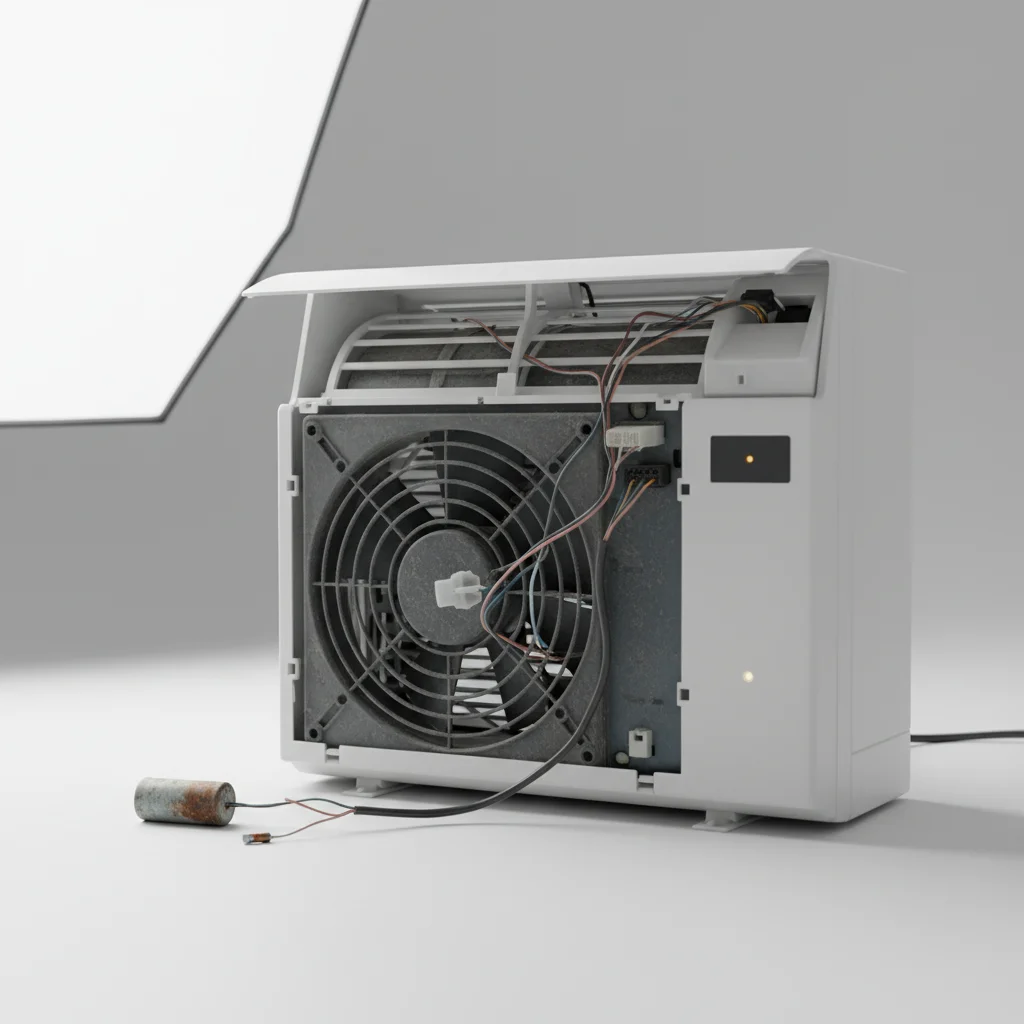
When your air conditioner fan stops working, it can quickly lead to an uncomfortable indoor environment. There are typically five common reasons why your AC fan might not be operating, ranging from simple electrical issues to more complex mechanical failures. Understanding these potential problems can help you diagnose the issue and determine if it’s a DIY fix or if professional help is needed.
Common Electrical Issues Affecting Your AC Fan
One of the most frequent culprits behind a non-functioning AC fan is an electrical problem. This could be a tripped circuit breaker, a faulty capacitor, or issues with the thermostat wiring. A tripped breaker is the easiest to check and resolve; simply locate your home’s electrical panel and reset the breaker labeled for your AC unit. If the breaker trips again immediately, there’s a deeper electrical short that requires professional attention.
The capacitor is a critical component that provides the initial jolt of electricity needed to start the fan motor. If the capacitor is failing, the fan may hum but not spin, or it might not attempt to start at all. Visually inspect the capacitor for bulging or leaking, which are clear signs of failure. Replacing a capacitor can be a DIY task for those comfortable with electrical work, but always ensure the power is off before attempting any repairs.
Motor Malfunctions and Wear and Tear
The fan motor itself can fail due to age, continuous use, or overheating. Over time, the bearings within the motor can wear out, causing friction and eventually leading to a complete seizure. If you hear grinding noises or the fan struggles to start, it’s often an indication of a failing motor. While some motors can be repaired, often a full replacement is the most cost-effective solution.
Another common issue is a seized motor due to lack of lubrication. Many older AC fan motors require periodic oiling to keep them running smoothly. Consult your AC unit’s manual to see if your model requires this maintenance. If the motor is seized, it will need to be replaced.
Thermostat Settings and Wiring Problems
|
Our Picks for the Best Air Conditioner in 2026
As an Amazon Associate I earn from qualifying purchases.
|
||
| Num | Product | Action |
|---|---|---|
| 1 | SereneLife Portable Swamp Cooler Air Conditioner - 2500 CFM Airflow, 8 Gallon Water Tank Portable Evaporative Air Cooler for Room & Outdoors, WiFi, Humidifier & Fan Modes, Ice Packs & Remote Included |

|
| 2 | Dreo Tower Fan for Bedroom, 2026 Upgraded DC Motor, 28ft/s High Velocity, 20dB Ultra Quiet Standing Fan, 8 Speeds 4 Modes, 90° Oscillating Bladeless Fan for Indoors, Floor Fans with Remote, Black |
|
| 3 | Portable Air Conditioners, 3-IN-1 Swamp Cooler, Evaporative Air Cooler,Remote & Touch Control, 90°+90° Oscillation,LED Screen, Air Coolong Fan for Outdoor Indoor |
|
| 4 | 24" Windowless Portable Air Conditioner, 15H Timer & 120°Oscillation, 3-IN-1 Portable AC Unit with Remote, 2-Gal Tank, 3 Modes & 3 Speeds, Ultra-Quiet Ventless Swamp Cooler for Home Office, Off |
|
| 5 | Midea 5,000 BTU EasyCool Small Window Air Conditioner - Cool up to 150 Sq. Ft. with Easy-to-Use Mechanical Controls and Reusable Filter, Perfect for Small Bedroom, Living Room, Home Office |
|
| 6 | BLACK+DECKER Window Air Conditioner 10000 BTU, AC Window Unit Cools Up to 450 Square Feet, Window AC Unit with Remote Control, 3 Cooling Speeds and Fan Only Function, BD10WT6, White |
|
| 7 | Dreo Tower Fan for Bedroom, 42 Inch 120° Oscillating Fan, 25dB Quiet DC Motor, 28ft/s Velocity Bladeless Standing Fan with 12 Speeds, 4 Modes, 12H Timer Cooling Fans for Home, Living Room |
|
| 8 | Windowless Portable Air Conditioner, 24.4" Small Evaporative Air Cooler for Room No Window, 3-Speed Settings, 4 Modes, 7H Timer, Remote Control, 4 Ice Packs, Quiet AC Unit for Bedroom, White |
|
| 9 | Evaporative Air Cooler with Remote & Timer, 2200+ CFM Portable Fan That Blows Cold Air for Large Room, Home Office, Bedroom - 2.1Gal High-Capacity Tank, 3 Modes, Whisper Quiet 30dB & Sleep Mode |
|
| 10 | Windowless Portable Air Conditioners with Remote, Ventless Ac Unit Ductless Air Cooler,Hoseless Quiet Evaporative Oscillating Swamp Cooler,12H Timer & 4 Ice Box for Room Indoor Outdoor Office Bedroom |
|
Sometimes, the problem isn’t with the AC unit itself but with the thermostat. Incorrect settings can prevent the fan from running. Ensure your thermostat is set to ‘Cool’ and not just ‘Fan On’ if you expect cooling. Also, check the fan setting; it should be on ‘Auto’ for normal operation or ‘On’ if you want continuous airflow. If the thermostat’s wiring is loose or corroded, it might not be sending the correct signals to the AC unit’s fan. This often requires a multimeter to test continuity and may necessitate professional repair.
Obstructions and Debris in the Fan Blades
External factors like obstructions can also prevent your AC fan from spinning. Leaves, twigs, dirt, or even small animals can get lodged in the outdoor unit’s fan blades, preventing them from rotating freely. Always turn off the power to your AC unit at the breaker before attempting to clear any debris. Use a stick or gloved hand to carefully remove any blockages. A bent fan blade can also cause imbalance and prevent proper operation, requiring a replacement blade or professional service.
Refrigerant Leaks and Low Levels
While less directly related to the fan’s mechanical operation, a severe refrigerant leak can indirectly cause the fan to stop working. When refrigerant levels are critically low, the system may freeze up, or safety sensors might shut down the entire unit, including the fan, to prevent damage. If you notice ice on your AC lines or hear a hissing sound, it’s a strong indicator of a refrigerant leak. This is a complex issue that always requires a certified HVAC technician to diagnose and repair.
- Check your circuit breaker for a tripped switch.
- Inspect the capacitor for any signs of bulging or leakage.
- Listen for unusual noises from the fan motor.
- Verify your thermostat settings are correct.
- Clear any visible debris from the outdoor unit’s fan blades.
Get our weekly buyer guide
Practical specs, not advice. Unsubscribe anytime.

This was super helpful when my outdoor unit fan wasn’t spinning. I was worried it was a major motor issue, but it turned out to be the capacitor. The guide helped me understand what to look for and confirm it wasn’t just a loose wire. I still had to call a pro for the replacement, but at least I knew what to tell them.
Our AC fan started making a really loud grinding noise before it eventually stopped. I was able to identify it as a potential mechanical failure with the fan motor itself, just like described. It helped me explain the problem clearly to the HVAC technician when they arrived. Knowing the possible causes made me feel more confident about the repair process.
My AC fan completely stopped last week and I was dreading a huge repair bill. After reading this, I checked the circuit breaker first, and sure enough, it was tripped! Resetting it fixed the problem instantly. So glad I didn’t call a technician for something so simple. This saved me a lot of hassle and money.
I followed the advice about checking the thermostat wiring because my fan was acting really erratic. While it gave me some good pointers, my issue ended up being more complex than just a loose wire. It was a good starting point, but I still needed a professional to fully diagnose and fix the internal thermostat board. It wasn’t a DIY fix for me.