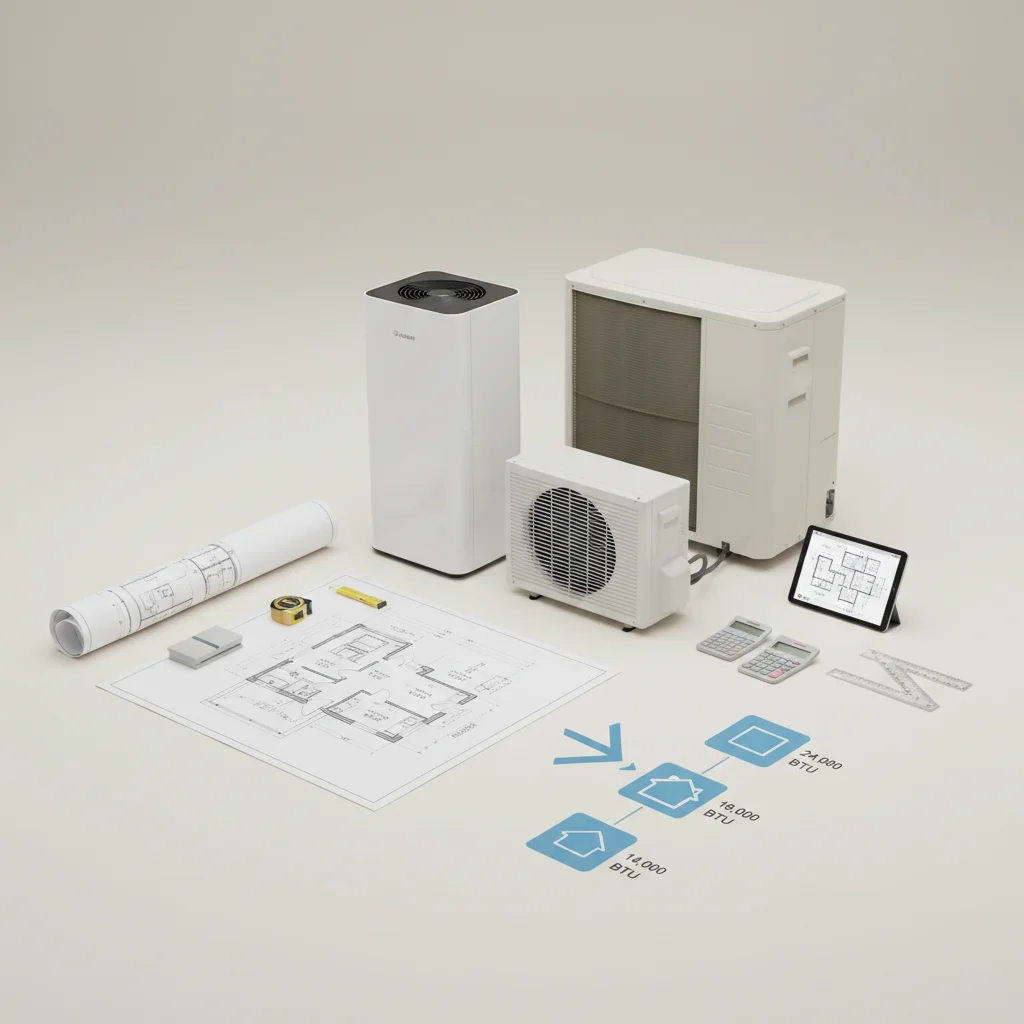
Choosing the correct air conditioner size is crucial for efficient cooling and energy savings. An undersized unit will struggle to cool your space, running constantly and failing to dehumidify effectively, while an oversized unit will cycle on and off too frequently, leading to poor humidity control and increased wear and tear. Generally, you need approximately 20 BTUs per square foot of living space. This means a 1,000 square foot room would typically require a 20,000 BTU air conditioner.
Understanding BTU and Cooling Capacity
BTU stands for British Thermal Unit, and it’s the standard measurement for an air conditioner’s cooling capacity. One BTU is the amount of energy required to raise the temperature of one pound of water by one degree Fahrenheit. For air conditioners, a higher BTU rating indicates a greater cooling capacity. However, simply going for the highest BTU isn’t always the best approach. Matching the BTU to your specific room size and environmental factors is key to optimal performance and comfort. For more home air guides on this site.
Factors beyond square footage, such as ceiling height, insulation quality, and the number of windows, all influence the ideal BTU requirement. A professional HVAC technician can perform a load calculation to determine the precise BTU needed for your home, taking into account all these variables for maximum efficiency.
Calculating Your Room’s Square Footage
To begin, accurately measure the length and width of the room you intend to cool. Multiply these two measurements to get the total square footage. For example, a room that is 15 feet long and 10 feet wide has a total area of 150 square feet. This basic calculation provides the foundation for estimating your BTU needs.
- Measure the length of the room.
- Measure the width of the room.
- Multiply length by width for square footage.
- Consider irregular shapes by breaking them into rectangles.
- Round up to the nearest whole foot for accuracy.
Adjusting for Environmental Factors
|
Our Picks for the Best Air Conditioner in 2026
As an Amazon Associate I earn from qualifying purchases.
|
||
| Num | Product | Action |
|---|---|---|
| 1 | Midea 5,000 BTU EasyCool Small Window Air Conditioner - Cool up to 150 Sq. Ft. with Easy-to-Use Mechanical Controls and Reusable Filter, Perfect for Small Bedroom, Living Room, Home Office |

|
| 2 | Dreo Tower Fan for Bedroom, 2026 Upgraded DC Motor, 28ft/s High Velocity, 20dB Ultra Quiet Standing Fan, 8 Speeds 4 Modes, 90° Oscillating Bladeless Fan for Indoors, Floor Fans with Remote, Black |
|
| 3 | 24" Windowless Portable Air Conditioner, 15H Timer & 120°Oscillation, 3-IN-1 Portable AC Unit with Remote, 2-Gal Tank, 3 Modes & 3 Speeds, Ultra-Quiet Ventless Swamp Cooler for Home Office, Off |
|
| 4 | Portable Air Conditioners, 3-IN-1 Swamp Cooler, Evaporative Air Cooler,Remote & Touch Control, 90°+90° Oscillation,LED Screen, Air Coolong Fan for Outdoor Indoor |
|
| 5 | BLACK+DECKER Window Air Conditioner 10000 BTU, AC Window Unit Cools Up to 450 Square Feet, Window AC Unit with Remote Control, 3 Cooling Speeds and Fan Only Function, BD10WT6, White |
|
| 6 | Evaporative Air Cooler with Remote & Timer, 2200+ CFM Portable Fan That Blows Cold Air for Large Room, Home Office, Bedroom - 2.1Gal High-Capacity Tank, 3 Modes, Whisper Quiet 30dB & Sleep Mode |
|
| 7 | Windowless Portable Air Conditioners with Remote, Ventless Ac Unit Ductless Air Cooler,Hoseless Quiet Evaporative Oscillating Swamp Cooler,12H Timer & 4 Ice Box for Room Indoor Outdoor Office Bedroom |
|
| 8 | SereneLife Portable Swamp Cooler Air Conditioner - 2500 CFM Airflow, 8 Gallon Water Tank Portable Evaporative Air Cooler for Room & Outdoors, WiFi, Humidifier & Fan Modes, Ice Packs & Remote Included |
|
| 9 | Windowless Portable Air Conditioner, 24.4" Small Evaporative Air Cooler for Room No Window, 3-Speed Settings, 4 Modes, 7H Timer, Remote Control, 4 Ice Packs, Quiet AC Unit for Bedroom, White |
|
| 10 | Dreo Tower Fan for Bedroom, 42 Inch 120° Oscillating Fan, 25dB Quiet DC Motor, 28ft/s Velocity Bladeless Standing Fan with 12 Speeds, 4 Modes, 12H Timer Cooling Fans for Home, Living Room |
|
Once you have your square footage, you’ll need to make adjustments based on other factors. Rooms with high ceilings (over 8 feet) or those that receive significant direct sunlight will require more BTUs. Conversely, rooms with good insulation and minimal sun exposure might need slightly fewer BTUs. The number of occupants and heat-generating appliances in the room also play a role.
For instance, a kitchen, which often contains heat-producing appliances like ovens and refrigerators, typically requires an additional 4,000 BTUs compared to a similarly sized living room. Similarly, if more than two people regularly occupy a room, you might add 600 BTUs per additional person.
Common AC Sizing Mistakes to Avoid
One of the most common mistakes is assuming a larger unit is always better. An oversized air conditioner will cool the room too quickly, shutting off before it has a chance to adequately remove humidity from the air. This can lead to a clammy, uncomfortable feeling and even promote mold growth. Another error is neglecting to account for heat sources like large windows or electronics.
Conversely, an undersized unit will run continuously, struggling to reach the desired temperature, leading to higher energy bills and premature wear on the compressor. Always aim for a unit that is appropriately sized for your specific cooling needs.
When to Consult a Professional
While DIY calculations can provide a good estimate, complex homes or specific cooling challenges often benefit from professional assessment. An HVAC technician can perform a Manual J load calculation, which is a detailed analysis that considers every aspect of your home’s construction, insulation, windows, and local climate. This ensures the most accurate sizing and optimal system performance.
They can also advise on the type of air conditioner best suited for your space, whether it’s a window unit, portable AC, or a central air system.Investing in a professional consultation can save you money and headaches in the long run by ensuring you get the right unit for your home.
Get our weekly buyer guide
Practical specs, not advice. Unsubscribe anytime.
