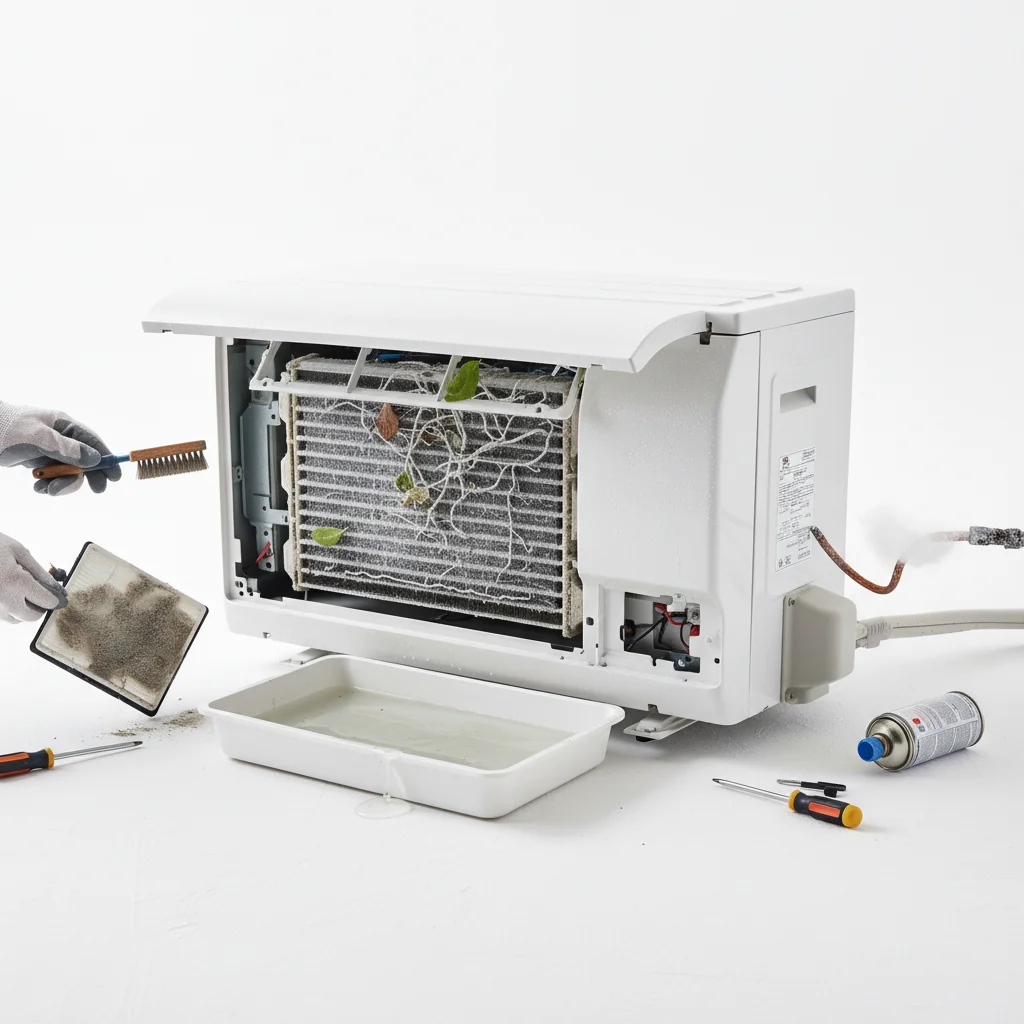
If your air conditioner isn’t cooling enough, it’s a frustrating problem that often points to one of seven common issues. From dirty filters to refrigerant leaks, understanding these potential culprits can help you diagnose and often resolve the problem, restoring comfort to your home.
Dirty Air Filters Restrict Airflow
One of the most frequent reasons an air conditioner struggles to cool is a dirty or clogged air filter. Over time, dust, pet dander, and other airborne particles accumulate on the filter, impeding the flow of air across the evaporator coil. This restriction not only reduces cooling efficiency but can also lead to the coil freezing up, further exacerbating the problem. Regularly checking and replacing your air filter every 1-3 months is a simple yet crucial maintenance step. For more home air guides on this site.
Low Refrigerant Levels Indicate a Leak
Refrigerant is the chemical compound responsible for absorbing heat from your home’s air. If your AC unit is low on refrigerant, it’s almost always due to a leak in the system, not because it gets ‘used up.’ A system with insufficient refrigerant cannot effectively cool your home, leading to warm air blowing from vents and increased energy bills. Detecting and repairing a refrigerant leak requires professional expertise, as does recharging the system to the correct levels.
Malfunctioning Thermostat Settings
Sometimes, the problem isn’t with the AC unit itself but with its control center: the thermostat. Incorrect settings, a dead battery, or a faulty sensor can all lead to your air conditioner not cooling effectively. Ensure your thermostat is set to ‘cool’ and not ‘fan only,’ and that the temperature setting is lower than the current room temperature. If it’s a smart thermostat, check its programming schedule for any unintended overrides.
Clogged Condensate Drain Line
|
Our Picks for the Best Air Conditioner in 2026
As an Amazon Associate I earn from qualifying purchases.
|
||
| Num | Product | Action |
|---|---|---|
| 1 | Midea 5,000 BTU EasyCool Small Window Air Conditioner - Cool up to 150 Sq. Ft. with Easy-to-Use Mechanical Controls and Reusable Filter, Perfect for Small Bedroom, Living Room, Home Office |

|
| 2 | Windowless Portable Air Conditioners with Remote, Ventless Ac Unit Ductless Air Cooler,Hoseless Quiet Evaporative Oscillating Swamp Cooler,12H Timer & 4 Ice Box for Room Indoor Outdoor Office Bedroom |
|
| 3 | Portable Air Conditioners, 3-IN-1 Swamp Cooler, Evaporative Air Cooler,Remote & Touch Control, 90°+90° Oscillation,LED Screen, Air Coolong Fan for Outdoor Indoor |
|
| 4 | BLACK+DECKER Window Air Conditioner 10000 BTU, AC Window Unit Cools Up to 450 Square Feet, Window AC Unit with Remote Control, 3 Cooling Speeds and Fan Only Function, BD10WT6, White |
|
| 5 | 24" Windowless Portable Air Conditioner, 15H Timer & 120°Oscillation, 3-IN-1 Portable AC Unit with Remote, 2-Gal Tank, 3 Modes & 3 Speeds, Ultra-Quiet Ventless Swamp Cooler for Home Office, Off |
|
| 6 | Dreo Tower Fan for Bedroom, 2026 Upgraded DC Motor, 28ft/s High Velocity, 20dB Ultra Quiet Standing Fan, 8 Speeds 4 Modes, 90° Oscillating Bladeless Fan for Indoors, Floor Fans with Remote, Black |
|
| 7 | Evaporative Air Cooler with Remote & Timer, 2200+ CFM Portable Fan That Blows Cold Air for Large Room, Home Office, Bedroom - 2.1Gal High-Capacity Tank, 3 Modes, Whisper Quiet 30dB & Sleep Mode |
|
| 8 | Windowless Portable Air Conditioner, 24.4" Small Evaporative Air Cooler for Room No Window, 3-Speed Settings, 4 Modes, 7H Timer, Remote Control, 4 Ice Packs, Quiet AC Unit for Bedroom, White |
|
| 9 | SereneLife Portable Swamp Cooler Air Conditioner - 2500 CFM Airflow, 8 Gallon Water Tank Portable Evaporative Air Cooler for Room & Outdoors, WiFi, Humidifier & Fan Modes, Ice Packs & Remote Included |
|
| 10 | Dreo Tower Fan for Bedroom, 42 Inch 120° Oscillating Fan, 25dB Quiet DC Motor, 28ft/s Velocity Bladeless Standing Fan with 12 Speeds, 4 Modes, 12H Timer Cooling Fans for Home, Living Room |
|
As your air conditioner cools, it removes humidity from the air, producing condensation. This water typically drains away through a condensate line. However, algae, mold, or debris can clog this line, causing water to back up. When the drain pan overflows, a safety switch in many AC units will shut down the system or prevent it from cooling to prevent water damage. Clearing a clogged condensate line can often be a DIY task, but persistent issues may require professional attention.
Outdoor Unit (Condenser) is Dirty or Obstructed
The outdoor unit, or condenser, is responsible for releasing the heat absorbed from your home. If the condenser coils are covered in dirt, leaves, or other debris, they cannot efficiently dissipate heat. This forces the compressor to work harder, reducing cooling capacity and increasing energy consumption. Regularly cleaning around your outdoor unit and gently rinsing the coils with a garden hose can significantly improve performance. Ensure there’s at least two feet of clear space around the unit for optimal airflow.
Undersized or Aging Air Conditioner
An air conditioner that is too small for your home’s square footage will constantly struggle to reach the desired temperature, leading to inadequate cooling and higher energy bills. Similarly, an aging unit, typically over 10-15 years old, may simply lose its efficiency and cooling power due to wear and tear on its components. If your AC unit is consistently underperforming despite regular maintenance, it might be time to consider an upgrade.
Electrical Issues and Component Failures
Various electrical issues can prevent your air conditioner from cooling properly. This could range from a tripped circuit breaker to a faulty capacitor, contactor, or compressor. A capacitor, for instance, provides the initial jolt of electricity to start the fan motor and compressor. If it fails, these critical components may not start, or run inefficiently. Diagnosing and repairing electrical components should always be handled by a qualified HVAC technician due to safety risks and the complexity of the system.
- Check and replace air filters monthly.
- Ensure thermostat batteries are fresh and settings are correct.
- Clear debris from around the outdoor condenser unit.
- Inspect the condensate drain line for clogs.
- Listen for unusual noises, which can indicate mechanical issues.
Get our weekly buyer guide
Practical specs, not advice. Unsubscribe anytime.
