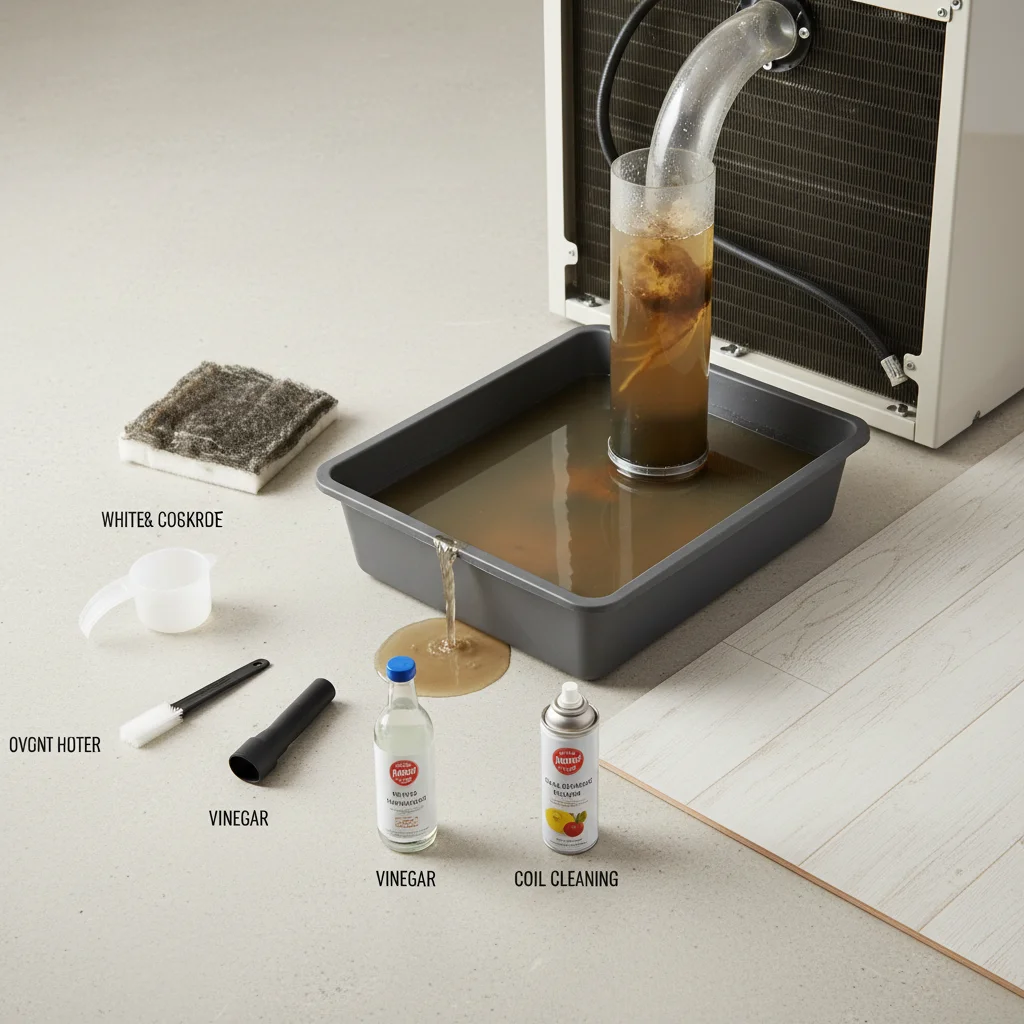
If your air conditioner isn’t draining properly, it’s likely due to one of five common issues, ranging from a clogged condensate drain line to a faulty condensate pump. Addressing these problems promptly can prevent water damage and maintain your AC’s efficiency.
Clogged Condensate Drain Line
The most frequent culprit behind an AC not draining is a clogged condensate drain line. Over time, algae, mold, and debris can accumulate in this pipe, creating a blockage that prevents water from flowing out. This blockage causes water to back up and potentially overflow from the drain pan. Regular cleaning of the drain line, often with a mixture of vinegar and water, can prevent these clogs. For complete home air library on this site.
Full or Overflowing Condensate Pan
A full or overflowing condensate pan indicates that water is collecting faster than it can drain, or that the drain line itself is completely blocked. This can happen if the pan’s capacity is exceeded due to a severe clog or if the AC unit is tilted, preventing proper drainage. Inspect the pan for cracks or damage, and ensure it is level to facilitate proper water flow.
Broken Condensate Pump
For AC units located in basements or areas where gravity drainage isn’t possible, a condensate pump is used to move water outdoors. If this pump malfunctions, water will accumulate in the drain pan and eventually overflow. Common signs of a broken pump include unusual noises, the pump not turning on, or visible water around the unit. A professional HVAC technician can diagnose and replace a faulty pump.
Frozen Evaporator Coil
|
Our Picks for the Best Air Conditioner in 2026
As an Amazon Associate I earn from qualifying purchases.
|
||
| Num | Product | Action |
|---|---|---|
| 1 | Dreo Tower Fan for Bedroom, 2026 Upgraded DC Motor, 28ft/s High Velocity, 20dB Ultra Quiet Standing Fan, 8 Speeds 4 Modes, 90° Oscillating Bladeless Fan for Indoors, Floor Fans with Remote, Black |

|
| 2 | BLACK+DECKER Window Air Conditioner 10000 BTU, AC Window Unit Cools Up to 450 Square Feet, Window AC Unit with Remote Control, 3 Cooling Speeds and Fan Only Function, BD10WT6, White |
|
| 3 | SereneLife Portable Swamp Cooler Air Conditioner - 2500 CFM Airflow, 8 Gallon Water Tank Portable Evaporative Air Cooler for Room & Outdoors, WiFi, Humidifier & Fan Modes, Ice Packs & Remote Included |
|
| 4 | Windowless Portable Air Conditioners with Remote, Ventless Ac Unit Ductless Air Cooler,Hoseless Quiet Evaporative Oscillating Swamp Cooler,12H Timer & 4 Ice Box for Room Indoor Outdoor Office Bedroom |
|
| 5 | Portable Air Conditioners, 3-IN-1 Swamp Cooler, Evaporative Air Cooler,Remote & Touch Control, 90°+90° Oscillation,LED Screen, Air Coolong Fan for Outdoor Indoor |
|
| 6 | 24" Windowless Portable Air Conditioner, 15H Timer & 120°Oscillation, 3-IN-1 Portable AC Unit with Remote, 2-Gal Tank, 3 Modes & 3 Speeds, Ultra-Quiet Ventless Swamp Cooler for Home Office, Off |
|
| 7 | Windowless Portable Air Conditioner, 24.4" Small Evaporative Air Cooler for Room No Window, 3-Speed Settings, 4 Modes, 7H Timer, Remote Control, 4 Ice Packs, Quiet AC Unit for Bedroom, White |
|
| 8 | Evaporative Air Cooler with Remote & Timer, 2200+ CFM Portable Fan That Blows Cold Air for Large Room, Home Office, Bedroom - 2.1Gal High-Capacity Tank, 3 Modes, Whisper Quiet 30dB & Sleep Mode |
|
| 9 | Dreo Tower Fan for Bedroom, 42 Inch 120° Oscillating Fan, 25dB Quiet DC Motor, 28ft/s Velocity Bladeless Standing Fan with 12 Speeds, 4 Modes, 12H Timer Cooling Fans for Home, Living Room |
|
| 10 | Midea 5,000 BTU EasyCool Small Window Air Conditioner - Cool up to 150 Sq. Ft. with Easy-to-Use Mechanical Controls and Reusable Filter, Perfect for Small Bedroom, Living Room, Home Office |
|
A frozen evaporator coil can also lead to water not draining correctly. When the coil freezes, it prevents the normal condensation process. As the ice melts, it produces an excessive amount of water that the drain system may not be able to handle, leading to overflow. This freezing is often caused by low refrigerant levels, a dirty air filter, or restricted airflow. Addressing the underlying cause of the freezing is crucial.
Improper Installation or Sloping
Sometimes, the issue stems from improper installation or an incorrect slope of the condensate drain line. If the line isn’t sloped downwards sufficiently, water won’t be able to flow out by gravity, leading to pooling and eventual overflow. Similarly, if the entire AC unit is not level, the condensate pan may not drain effectively. This often requires professional adjustment to correct the pitch of the drain line or the unit itself.
- Regularly pour a cup of distilled vinegar down the condensate drain line to prevent algae growth.
- Ensure your air filter is clean and replaced every 1-3 months to maintain proper airflow.
- Check the condensate pan for any cracks or damage that could lead to leaks.
- Listen for unusual noises from your condensate pump, which could indicate a malfunction.
- Verify that your outdoor drain outlet is clear of debris and not blocked.
Addressing these common reasons for an air conditioner not draining can save you from costly repairs and water damage. While some fixes are DIY-friendly, more complex issues like a broken condensate pump or improper installation often require the expertise of a certified HVAC technician. Regular maintenance is key to preventing these problems and ensuring your AC runs smoothly throughout the cooling season. Consider investing in a smart AC monitoring system to alert you to potential issues before they become major problems.These systems can track performance and humidity levels, providing early warnings for drainage issues. For more advanced solutions, exploring high-efficiency AC units with built-in diagnostic features can offer peace of mind.These models often include sensors that can detect and report drainage problems directly to your smartphone, allowing for quick intervention.
Get our weekly buyer guide
Practical specs, not advice. Unsubscribe anytime.
