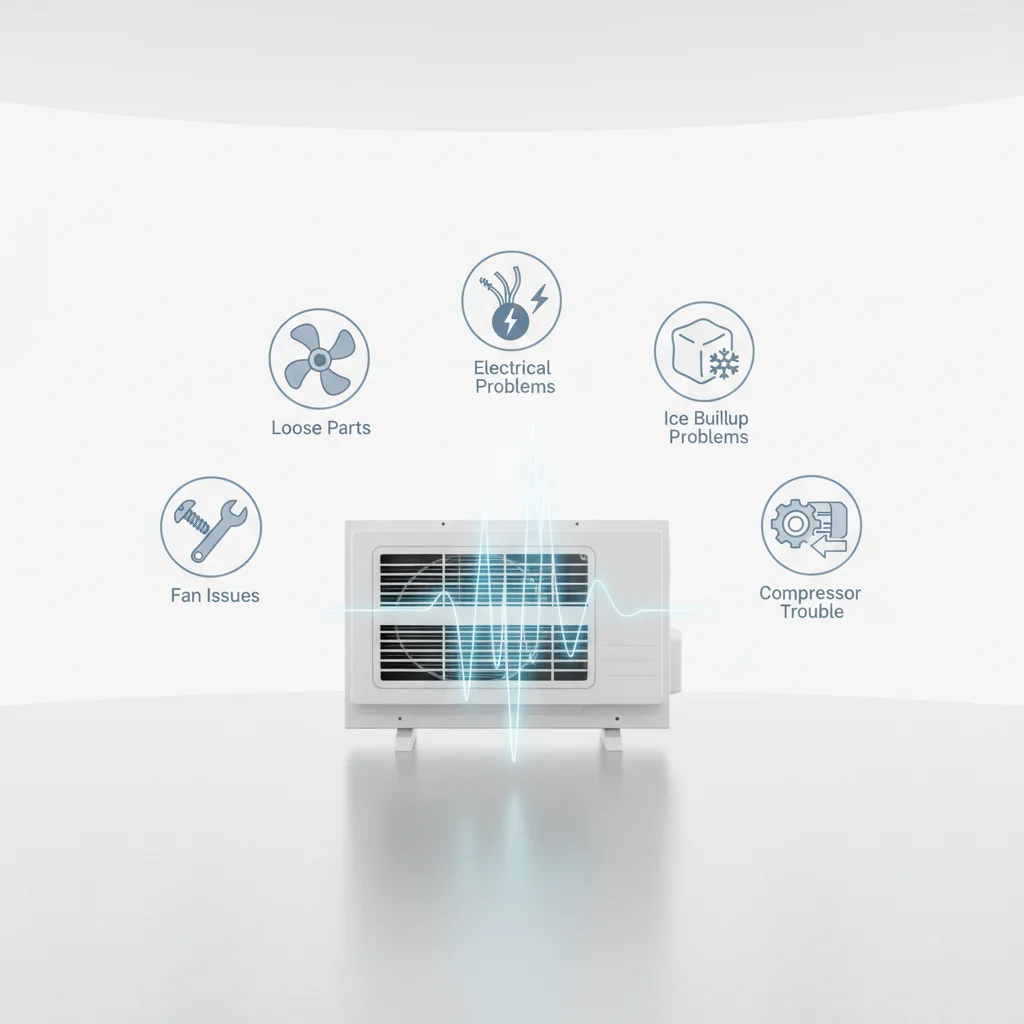
An air conditioner humming noise can be a concerning sound, often indicating an underlying issue that needs attention. There are five common causes for this type of noise, ranging from minor electrical problems to more significant mechanical failures. Identifying the specific source of the hum is crucial for effective troubleshooting and repair, helping to prevent further damage and restore your AC unit’s quiet operation.
Loose Fan Blades or Motor Mounts
One frequent cause of a humming noise is loose fan blades or motor mounts within the outdoor unit. Over time, vibrations can cause these components to loosen, leading to an audible hum as the fan operates. If the fan blades are out of balance, they can also create a rhythmic humming sound. Inspecting the outdoor unit for any visible wobbling of the fan or loose screws on the motor mount can help diagnose this issue. Tightening any loose components often resolves the problem.
Failing Capacitor
A failing capacitor is another common culprit behind an AC humming noise. The capacitor provides the initial electrical boost needed to start the compressor and fan motors. When it starts to weaken or fail, it may struggle to provide enough power, resulting in a continuous hum as the motor tries to start but can’t. This can often be accompanied by the unit not blowing cold air. A professional HVAC technician can test the capacitor and replace it if it’s faulty.
Dirty or Obstructed Condenser Coils
|
Our Picks for the Best Air Conditioner in 2026
As an Amazon Associate I earn from qualifying purchases.
|
||
| Num | Product | Action |
|---|---|---|
| 1 | Portable Air Conditioners, 3-IN-1 Swamp Cooler, Evaporative Air Cooler,Remote & Touch Control, 90°+90° Oscillation,LED Screen, Air Coolong Fan for Outdoor Indoor |

|
| 2 | Windowless Portable Air Conditioner, 24.4" Small Evaporative Air Cooler for Room No Window, 3-Speed Settings, 4 Modes, 7H Timer, Remote Control, 4 Ice Packs, Quiet AC Unit for Bedroom, White |
|
| 3 | BLACK+DECKER Window Air Conditioner 10000 BTU, AC Window Unit Cools Up to 450 Square Feet, Window AC Unit with Remote Control, 3 Cooling Speeds and Fan Only Function, BD10WT6, White |
|
| 4 | Windowless Portable Air Conditioners with Remote, Ventless Ac Unit Ductless Air Cooler,Hoseless Quiet Evaporative Oscillating Swamp Cooler,12H Timer & 4 Ice Box for Room Indoor Outdoor Office Bedroom |
|
| 5 | SereneLife Portable Swamp Cooler Air Conditioner - 2500 CFM Airflow, 8 Gallon Water Tank Portable Evaporative Air Cooler for Room & Outdoors, WiFi, Humidifier & Fan Modes, Ice Packs & Remote Included |
|
| 6 | Dreo Tower Fan for Bedroom, 2026 Upgraded DC Motor, 28ft/s High Velocity, 20dB Ultra Quiet Standing Fan, 8 Speeds 4 Modes, 90° Oscillating Bladeless Fan for Indoors, Floor Fans with Remote, Black |
|
| 7 | 24" Windowless Portable Air Conditioner, 15H Timer & 120°Oscillation, 3-IN-1 Portable AC Unit with Remote, 2-Gal Tank, 3 Modes & 3 Speeds, Ultra-Quiet Ventless Swamp Cooler for Home Office, Off |
|
| 8 | Evaporative Air Cooler with Remote & Timer, 2200+ CFM Portable Fan That Blows Cold Air for Large Room, Home Office, Bedroom - 2.1Gal High-Capacity Tank, 3 Modes, Whisper Quiet 30dB & Sleep Mode |
|
| 9 | Midea 5,000 BTU EasyCool Small Window Air Conditioner - Cool up to 150 Sq. Ft. with Easy-to-Use Mechanical Controls and Reusable Filter, Perfect for Small Bedroom, Living Room, Home Office |
|
| 10 | Dreo Tower Fan for Bedroom, 42 Inch 120° Oscillating Fan, 25dB Quiet DC Motor, 28ft/s Velocity Bladeless Standing Fan with 12 Speeds, 4 Modes, 12H Timer Cooling Fans for Home, Living Room |
|
Dirty or obstructed condenser coils can also contribute to a humming sound. When the coils are covered in dirt, dust, or debris, the unit has to work harder to dissipate heat, putting a strain on the compressor. This increased effort can manifest as a low hum. Regularly cleaning your condenser coils, especially during peak cooling season, can improve efficiency and reduce the likelihood of this issue. Ensure the area around the outdoor unit is clear of vegetation and other obstructions.
Refrigerant Issues
Low refrigerant levels or an overcharged system can cause the compressor to hum. When refrigerant is low, the compressor may struggle to cool effectively, leading to increased strain and a humming noise. Conversely, an overcharged system can also put undue pressure on the compressor. Both scenarios require a professional to diagnose and correct the refrigerant levels, as handling refrigerants without proper training and equipment can be dangerous and is often illegal.
Electrical Problems
Electrical issues, such as a faulty contactor, relay, or wiring, can also produce a humming sound. A contactor, for example, is an electrical switch that sends power to the compressor and outdoor fan. If it’s sticking or failing, it can create a buzzing or humming noise. Similarly, loose or corroded wiring can cause electrical resistance and a hum. These types of electrical problems should always be addressed by a qualified electrician or HVAC technician to ensure safety and proper repair.
- Check for loose fan blades or motor mounts in the outdoor unit.
- Listen for the hum’s location to pinpoint the source more accurately.
- Ensure condenser coils are clean and free of debris.
- Consider if the unit is struggling to start or cool effectively.
- Consult an HVAC professional for electrical or refrigerant issues.
Get our weekly buyer guide
Practical specs, not advice. Unsubscribe anytime.
