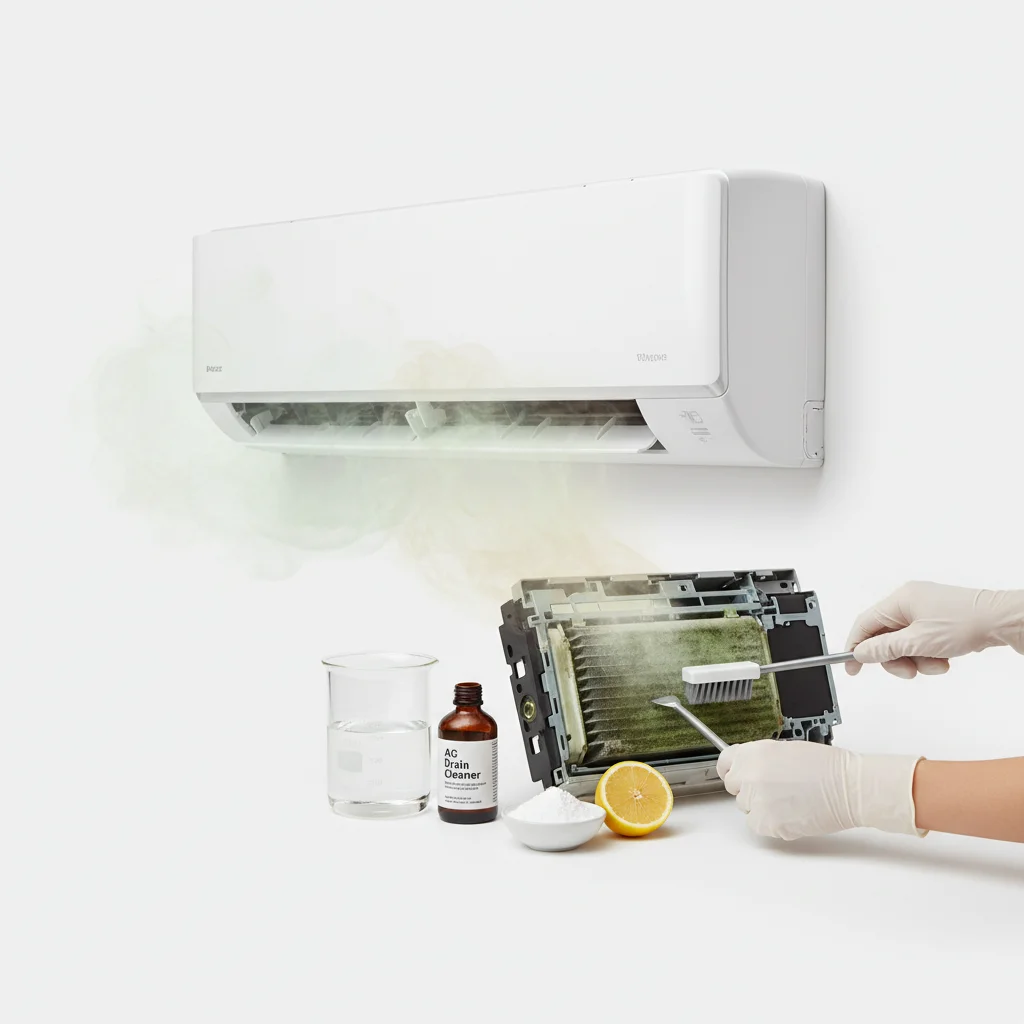
If your air conditioner smells like vinegar, it’s often a sign of bacterial growth or a dirty condensate pan. This distinct sour odor can indicate one of five common issues within your AC system, ranging from simple maintenance needs to more complex problems requiring professional attention.
Why Your AC Might Smell Like Vinegar
The most frequent culprit behind a vinegar-like smell from your air conditioner is the accumulation of mold, mildew, or bacteria within the unit. This often occurs in the condensate drain pan or on the evaporator coils, where moisture provides an ideal breeding ground. As these microorganisms grow, they release volatile organic compounds (VOCs) that produce the sour odor you detect. For home air buying guides on this site.
Another reason could be a dirty air filter. A clogged filter restricts airflow and can trap moisture and debris, leading to microbial growth. Regularly replacing your air filter is a simple yet effective way to prevent many odor issues.
Condensate Drain Pan Issues
The condensate drain pan collects moisture removed from the air by your AC. If this pan isn’t draining properly, water can stagnate, creating a perfect environment for bacteria and mold. Over time, this stagnant water can develop a strong, vinegar-like smell that is then circulated throughout your home by the AC fan.
Cleaning the condensate pan is a crucial step in resolving this issue. You can often access it by removing the front panel of your indoor unit. Use a mixture of bleach and water (1 part bleach to 16 parts water) or a specialized AC coil cleaner to thoroughly clean the pan and drain line. Ensure the drain line is clear of any blockages.
Evaporator Coil Contamination
The evaporator coils are responsible for absorbing heat from your indoor air. Due to their cold, damp surface, they are susceptible to collecting dust, dirt, and microbial growth. When these contaminants build up, they can emit a sour, vinegar-like smell. Professional cleaning of the evaporator coils is often necessary to completely eliminate this type of odor.
Regular maintenance, including professional coil cleaning every 1-2 years, can prevent significant buildup and associated odors. This also helps maintain the efficiency of your unit.
Chemical Reactions or Refrigerant Leaks
|
Our Picks for the Best Air Conditioner in 2026
As an Amazon Associate I earn from qualifying purchases.
|
||
| Num | Product | Action |
|---|---|---|
| 1 | BLACK+DECKER Window Air Conditioner 10000 BTU, AC Window Unit Cools Up to 450 Square Feet, Window AC Unit with Remote Control, 3 Cooling Speeds and Fan Only Function, BD10WT6, White |

|
| 2 | Windowless Portable Air Conditioner, 24.4" Small Evaporative Air Cooler for Room No Window, 3-Speed Settings, 4 Modes, 7H Timer, Remote Control, 4 Ice Packs, Quiet AC Unit for Bedroom, White |
|
| 3 | Dreo Tower Fan for Bedroom, 42 Inch 120° Oscillating Fan, 25dB Quiet DC Motor, 28ft/s Velocity Bladeless Standing Fan with 12 Speeds, 4 Modes, 12H Timer Cooling Fans for Home, Living Room |
|
| 4 | Midea 5,000 BTU EasyCool Small Window Air Conditioner - Cool up to 150 Sq. Ft. with Easy-to-Use Mechanical Controls and Reusable Filter, Perfect for Small Bedroom, Living Room, Home Office |
|
| 5 | SereneLife Portable Swamp Cooler Air Conditioner - 2500 CFM Airflow, 8 Gallon Water Tank Portable Evaporative Air Cooler for Room & Outdoors, WiFi, Humidifier & Fan Modes, Ice Packs & Remote Included |
|
| 6 | Evaporative Air Cooler with Remote & Timer, 2200+ CFM Portable Fan That Blows Cold Air for Large Room, Home Office, Bedroom - 2.1Gal High-Capacity Tank, 3 Modes, Whisper Quiet 30dB & Sleep Mode |
|
| 7 | 24" Windowless Portable Air Conditioner, 15H Timer & 120°Oscillation, 3-IN-1 Portable AC Unit with Remote, 2-Gal Tank, 3 Modes & 3 Speeds, Ultra-Quiet Ventless Swamp Cooler for Home Office, Off |
|
| 8 | Portable Air Conditioners, 3-IN-1 Swamp Cooler, Evaporative Air Cooler,Remote & Touch Control, 90°+90° Oscillation,LED Screen, Air Coolong Fan for Outdoor Indoor |
|
| 9 | Dreo Tower Fan for Bedroom, 2026 Upgraded DC Motor, 28ft/s High Velocity, 20dB Ultra Quiet Standing Fan, 8 Speeds 4 Modes, 90° Oscillating Bladeless Fan for Indoors, Floor Fans with Remote, Black |
|
| 10 | Windowless Portable Air Conditioners with Remote, Ventless Ac Unit Ductless Air Cooler,Hoseless Quiet Evaporative Oscillating Swamp Cooler,12H Timer & 4 Ice Box for Room Indoor Outdoor Office Bedroom |
|
While less common for a vinegar smell, certain chemical reactions within the AC unit or even a minor refrigerant leak can sometimes produce unusual odors. Refrigerant leaks typically have a sweet, chloroform-like smell, but in rare cases, it might be misinterpreted. If you suspect a refrigerant leak, it’s imperative to call a certified HVAC technician immediately, as refrigerants are harmful and require specialized handling.
Always prioritize safety when dealing with potential chemical issues. Never attempt to handle refrigerant yourself.
Addressing the Vinegar Smell: DIY vs. Professional Help
For minor issues like a dirty filter or a slightly clogged condensate pan, you can often resolve the vinegar smell yourself. Here’s a quick checklist:
- Replace your air filter every 1-3 months.
- Clean the condensate drain pan with a bleach solution.
- Ensure the condensate drain line is free of obstructions.
- Check for any visible mold or mildew on accessible parts.
However, if the smell persists after these steps, or if you suspect a more serious problem like extensive mold growth on the evaporator coils or a refrigerant leak, it’s best to consult a professional HVAC technician. They have the tools and expertise to diagnose and fix the underlying issue safely and effectively.
Consider investing in a high-quality air purifier to help mitigate lingering odors and improve overall indoor air quality.These devices can capture airborne particles and some VOCs, contributing to a fresher home environment.
Preventative Measures for a Fresh-Smelling AC
Preventing a vinegar smell from returning involves consistent maintenance. Schedule annual professional AC tune-ups to ensure all components are clean and functioning correctly. This includes checking refrigerant levels, cleaning coils, and inspecting the drain system.
Additionally, consider installing a UV light in your AC system. UV lights can effectively kill mold and bacteria on the evaporator coils and in the drain pan, significantly reducing the chances of microbial growth and associated odors.This is a proactive step that can save you from future odor problems and improve air quality.
By understanding the common causes and taking appropriate action, you can eliminate that unpleasant vinegar smell and enjoy fresh, clean air from your air conditioner.
Get our weekly buyer guide
Practical specs, not advice. Unsubscribe anytime.
