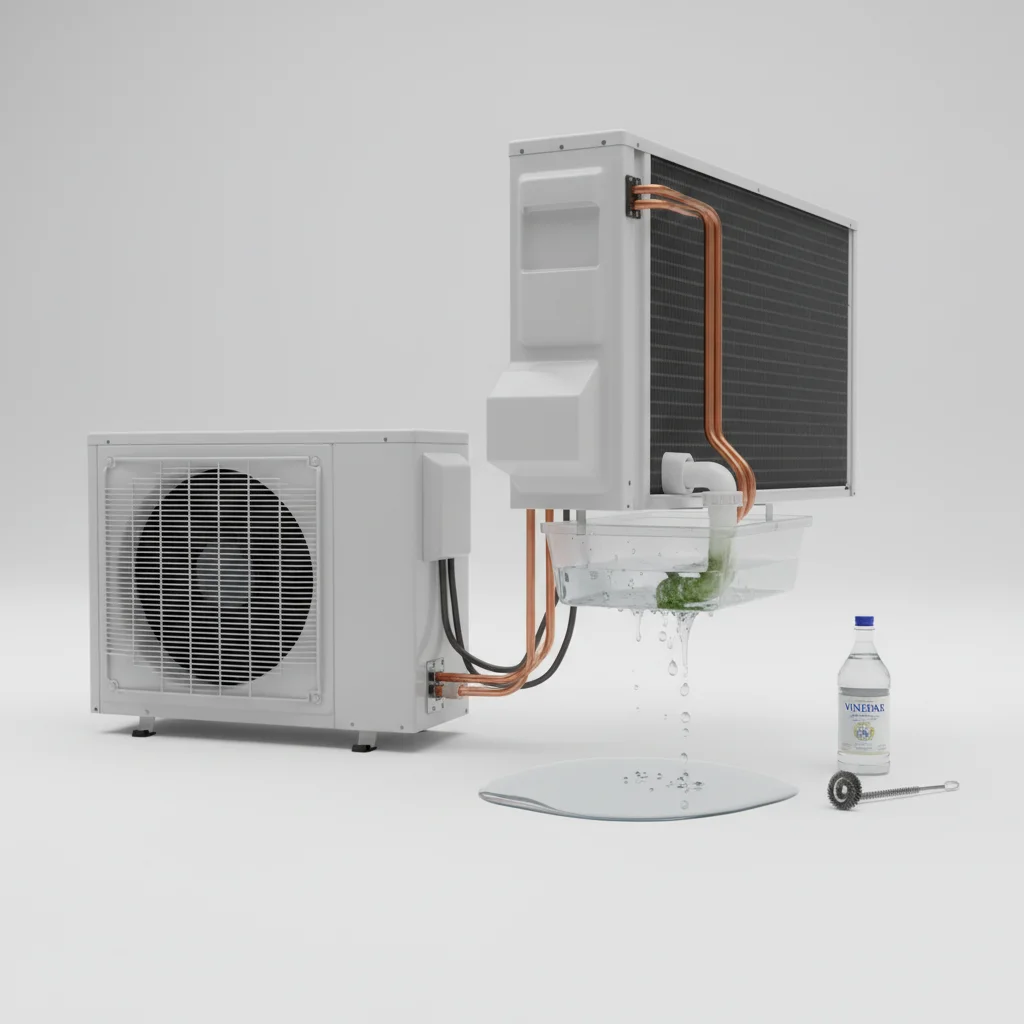
If your air conditioner isn’t draining properly, it’s likely due to one of five common issues that can lead to water accumulation and potential damage. Understanding these causes and their corresponding fixes can help you resolve the problem efficiently and prevent future occurrences.
Clogged Condensate Drain Line
The most frequent culprit behind an AC not draining is a clogged condensate drain line. Over time, algae, mold, and sludge can build up inside the PVC pipe, creating a blockage that prevents water from flowing out. This blockage causes water to back up into the drain pan, which can then overflow. To clear a minor clog, you can often use a wet/dry vacuum to suction out the blockage from the outdoor end of the drain line. For more stubborn clogs, a mixture of distilled white vinegar and water poured down the line can help dissolve the buildup. For home air buying guides on this site.
Full or Damaged Condensate Drain Pan
The condensate drain pan collects water dripping from the evaporator coil. If this pan becomes full, it indicates that the drain line is likely blocked, or the pan itself is cracked or damaged. A full pan will cause water to overflow. Inspect the pan for any visible cracks or holes. If the pan is damaged, it will need to be replaced. If it’s simply full, address the drain line issue first. Regularly cleaning the drain pan can prevent the accumulation of debris that contributes to clogs.
Disconnected Condensate Drain Line
|
Our Picks for the Best Air Conditioner in 2026
As an Amazon Associate I earn from qualifying purchases.
|
||
| Num | Product | Action |
|---|---|---|
| 1 | Evaporative Air Cooler with Remote & Timer, 2200+ CFM Portable Fan That Blows Cold Air for Large Room, Home Office, Bedroom - 2.1Gal High-Capacity Tank, 3 Modes, Whisper Quiet 30dB & Sleep Mode |

|
| 2 | Portable Air Conditioners, 3-IN-1 Swamp Cooler, Evaporative Air Cooler,Remote & Touch Control, 90°+90° Oscillation,LED Screen, Air Coolong Fan for Outdoor Indoor |
|
| 3 | Dreo Tower Fan for Bedroom, 42 Inch 120° Oscillating Fan, 25dB Quiet DC Motor, 28ft/s Velocity Bladeless Standing Fan with 12 Speeds, 4 Modes, 12H Timer Cooling Fans for Home, Living Room |
|
| 4 | Midea 5,000 BTU EasyCool Small Window Air Conditioner - Cool up to 150 Sq. Ft. with Easy-to-Use Mechanical Controls and Reusable Filter, Perfect for Small Bedroom, Living Room, Home Office |
|
| 5 | 24" Windowless Portable Air Conditioner, 15H Timer & 120°Oscillation, 3-IN-1 Portable AC Unit with Remote, 2-Gal Tank, 3 Modes & 3 Speeds, Ultra-Quiet Ventless Swamp Cooler for Home Office, Off |
|
| 6 | SereneLife Portable Swamp Cooler Air Conditioner - 2500 CFM Airflow, 8 Gallon Water Tank Portable Evaporative Air Cooler for Room & Outdoors, WiFi, Humidifier & Fan Modes, Ice Packs & Remote Included |
|
| 7 | BLACK+DECKER Window Air Conditioner 10000 BTU, AC Window Unit Cools Up to 450 Square Feet, Window AC Unit with Remote Control, 3 Cooling Speeds and Fan Only Function, BD10WT6, White |
|
| 8 | Dreo Tower Fan for Bedroom, 2026 Upgraded DC Motor, 28ft/s High Velocity, 20dB Ultra Quiet Standing Fan, 8 Speeds 4 Modes, 90° Oscillating Bladeless Fan for Indoors, Floor Fans with Remote, Black |
|
| 9 | Windowless Portable Air Conditioners with Remote, Ventless Ac Unit Ductless Air Cooler,Hoseless Quiet Evaporative Oscillating Swamp Cooler,12H Timer & 4 Ice Box for Room Indoor Outdoor Office Bedroom |
|
| 10 | Windowless Portable Air Conditioner, 24.4" Small Evaporative Air Cooler for Room No Window, 3-Speed Settings, 4 Modes, 7H Timer, Remote Control, 4 Ice Packs, Quiet AC Unit for Bedroom, White |
|
Sometimes, the condensate drain line can become disconnected from the drain pan or the outdoor discharge point. This can happen due to vibrations from the unit or improper installation. When the line is disconnected, water will simply spill out rather than being directed away. Carefully inspect the connections at both ends of the drain line. If you find a disconnection, reattach it securely, using PVC cement if necessary for a permanent fix. Ensure all connections are tight and leak-free.
Dirty Air Filter
A surprisingly common cause of drainage issues is a dirty air filter. A clogged filter restricts airflow over the evaporator coil, causing the coil to get too cold and potentially freeze. When the ice melts, it produces an excessive amount of water that the drain system may not be able to handle, leading to overflow. Replacing your air filter every 1-3 months, depending on usage and household conditions, is a simple yet effective preventative measure.
Improper Installation or Sloping
For the condensate drain line to function correctly, it must have a slight downward slope to allow gravity to carry the water away. If the line was installed without the proper slope, or if the unit has shifted over time, water can pool in the line rather than draining. This can lead to standing water and eventual clogs. Check the slope of your drain line with a level. If it’s not sloped correctly, you may need to adjust the positioning of the line or the AC unit itself. This might require professional assistance to ensure proper reinstallation.
- Regularly pour a cup of distilled white vinegar down the condensate line to prevent algae growth.
- Ensure your air filter is clean and replaced every 1-3 months.
- Inspect the condensate drain pan for cracks or damage during routine maintenance.
- Keep the area around your outdoor unit clear of debris that could block the drain line exit.
- Schedule annual professional AC maintenance to catch potential drainage issues early.
Get our weekly buyer guide
Practical specs, not advice. Unsubscribe anytime.
