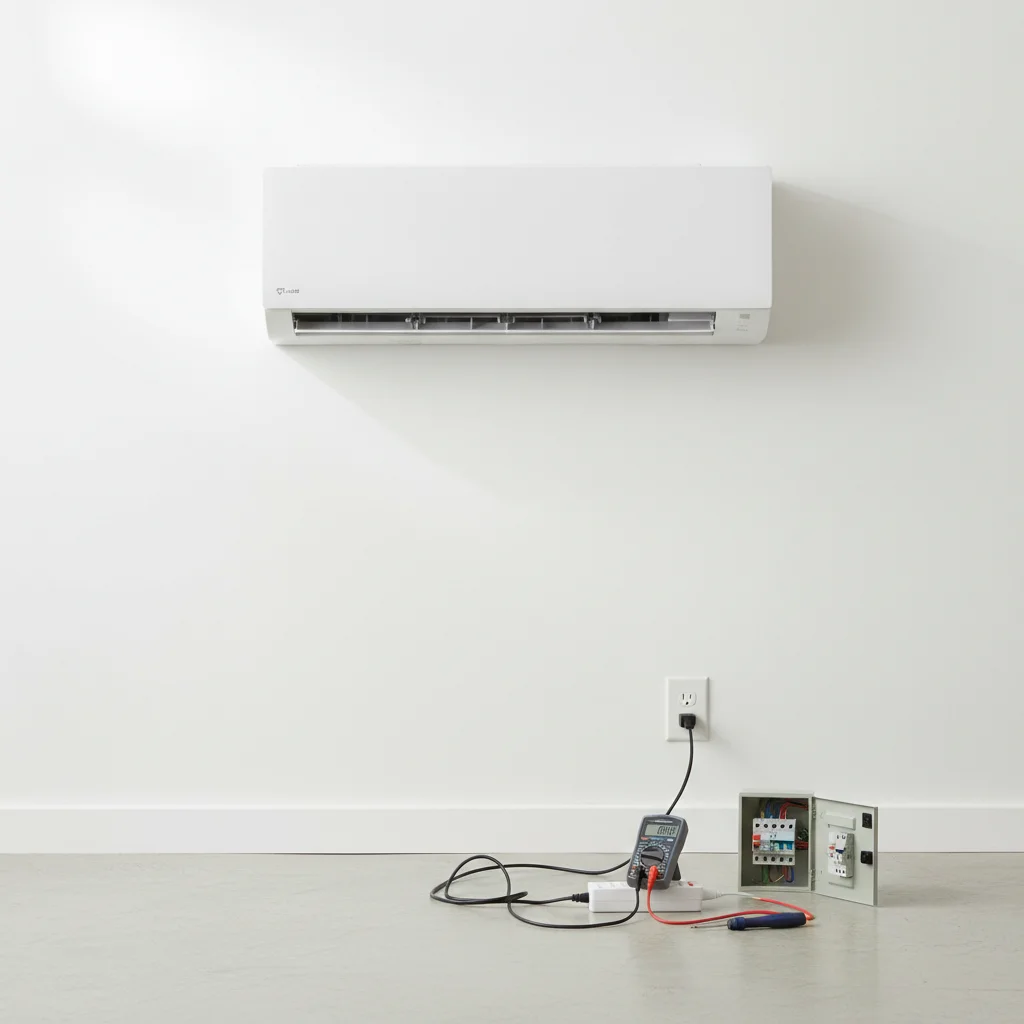
If your air conditioner isn’t turning on after a power outage, it’s often due to a tripped circuit breaker, a safety lockout, or a surge protector issue. There are five common fixes you can try before calling a professional, ranging from simple resets to checking specific components.
Check Your Circuit Breaker
The most frequent culprit after a power outage is a tripped circuit breaker. Power surges can cause your AC’s dedicated breaker to flip to the ‘off’ or middle position to protect the unit. Locate your home’s electrical panel and identify the breaker labeled for your air conditioner. Firmly switch it completely off, wait 30 seconds, and then switch it back to the ‘on’ position. If it immediately trips again, there might be a more serious electrical issue requiring professional attention.
Reset Your Thermostat
Sometimes, a power interruption can cause your thermostat to lose its settings or enter a fault mode. Try resetting your thermostat. For many digital models, this involves removing the batteries (if applicable), waiting a minute, and then reinserting them or pressing a designated reset button. Consult your thermostat’s manual for specific reset instructions. After resetting, ensure it’s set to ‘cool’ mode and the temperature is lower than the current room temperature.
Wait for the AC’s Safety Lockout to Reset
|
Our Picks for the Best Air Conditioner in 2026
As an Amazon Associate I earn from qualifying purchases.
|
||
| Num | Product | Action |
|---|---|---|
| 1 | Midea 5,000 BTU EasyCool Small Window Air Conditioner - Cool up to 150 Sq. Ft. with Easy-to-Use Mechanical Controls and Reusable Filter, Perfect for Small Bedroom, Living Room, Home Office |

|
| 2 | Windowless Portable Air Conditioner, 24.4" Small Evaporative Air Cooler for Room No Window, 3-Speed Settings, 4 Modes, 7H Timer, Remote Control, 4 Ice Packs, Quiet AC Unit for Bedroom, White |
|
| 3 | Portable Air Conditioners, 3-IN-1 Swamp Cooler, Evaporative Air Cooler,Remote & Touch Control, 90°+90° Oscillation,LED Screen, Air Coolong Fan for Outdoor Indoor |
|
| 4 | SereneLife Portable Swamp Cooler Air Conditioner - 2500 CFM Airflow, 8 Gallon Water Tank Portable Evaporative Air Cooler for Room & Outdoors, WiFi, Humidifier & Fan Modes, Ice Packs & Remote Included |
|
| 5 | BLACK+DECKER Window Air Conditioner 10000 BTU, AC Window Unit Cools Up to 450 Square Feet, Window AC Unit with Remote Control, 3 Cooling Speeds and Fan Only Function, BD10WT6, White |
|
| 6 | Windowless Portable Air Conditioners with Remote, Ventless Ac Unit Ductless Air Cooler,Hoseless Quiet Evaporative Oscillating Swamp Cooler,12H Timer & 4 Ice Box for Room Indoor Outdoor Office Bedroom |
|
| 7 | 24" Windowless Portable Air Conditioner, 15H Timer & 120°Oscillation, 3-IN-1 Portable AC Unit with Remote, 2-Gal Tank, 3 Modes & 3 Speeds, Ultra-Quiet Ventless Swamp Cooler for Home Office, Off |
|
| 8 | Dreo Tower Fan for Bedroom, 2026 Upgraded DC Motor, 28ft/s High Velocity, 20dB Ultra Quiet Standing Fan, 8 Speeds 4 Modes, 90° Oscillating Bladeless Fan for Indoors, Floor Fans with Remote, Black |
|
| 9 | Dreo Tower Fan for Bedroom, 42 Inch 120° Oscillating Fan, 25dB Quiet DC Motor, 28ft/s Velocity Bladeless Standing Fan with 12 Speeds, 4 Modes, 12H Timer Cooling Fans for Home, Living Room |
|
| 10 | Evaporative Air Cooler with Remote & Timer, 2200+ CFM Portable Fan That Blows Cold Air for Large Room, Home Office, Bedroom - 2.1Gal High-Capacity Tank, 3 Modes, Whisper Quiet 30dB & Sleep Mode |
|
Modern air conditioners have built-in safety features that prevent rapid cycling, which can damage the compressor. After a power outage, your AC might enter a short delay or lockout period, typically lasting 5-30 minutes, before it allows itself to restart. This is a normal protective measure. Be patient and wait for at least 30 minutes after power is restored before attempting to turn the unit on again. If it still doesn’t start, proceed to other troubleshooting steps.
Inspect the Outdoor Unit for Damage
While less common, a power outage, especially if accompanied by a storm, could have caused physical damage to your outdoor AC unit. Visually inspect the condenser unit for any obvious signs of damage, such as loose wires, debris lodged in the fan, or a bent fan blade. Ensure the area around the unit is clear of obstructions. If you notice any visible damage or hear unusual noises, do not attempt to operate the unit and contact an HVAC technician.
Check Your Surge Protector or Disconnect Box
If your AC unit is connected to a surge protector, or if your outdoor unit has a separate disconnect box, these components might be the issue. Check the surge protector to ensure it hasn’t tripped or failed. For the outdoor disconnect box, which is usually a small metal box near the condenser, open it and check if the fuse is blown or the switch is in the ‘off’ position. Always exercise caution when dealing with electrical components and consider calling a professional if you are unsure.
- Ensure the circuit breaker is fully reset.
- Confirm your thermostat is set correctly and has power.
- Allow at least 30 minutes for the AC’s safety lockout to clear.
- Visually inspect the outdoor unit for any obvious damage.
- Check any surge protectors or disconnect switches for faults.
Get our weekly buyer guide
Practical specs, not advice. Unsubscribe anytime.
